

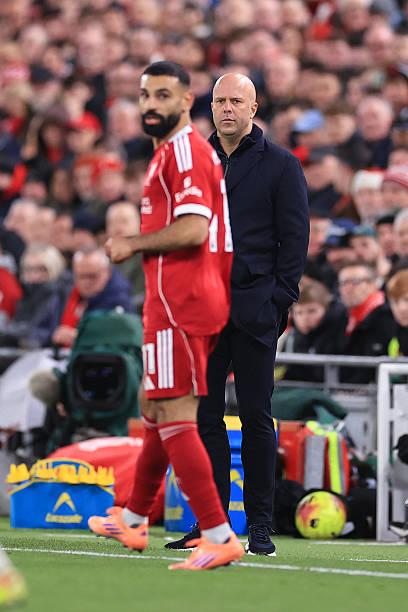
The Reconciliation: Understanding the Arne Slot Mohamed Salah Feud Resolution
The Arne Slot Mohamed Salah feud that threatened to tear Liverpool apart in December 2025 has reached a remarkable resolution, with the Dutch manager now praising aspects of his Egyptian superstar’s game that he values “most at the moment.” This dramatic turnaround from one of English football’s most explosive public disputes represents both a personal reconciliation between two strong-willed individuals and a professional necessity for a Liverpool side chasing silverware across multiple competitions.
The Arne Slot Mohamed Salah feud resolution became evident when Slot welcomed his talisman back from the Africa Cup of Nations with comments emphasizing Salah’s importance: “Mo has been so important for this club, for me, so I’m happy that he’s back.” This warm reception stands in stark contrast to the icy relationship just weeks earlier when Salah publicly declared their relationship had “broken down” and he’d been “thrown under the bus.”
What does Arne Slot like most about Mohamed Salah in this new chapter of their relationship? According to sources close to the situation and Slot’s own comments, the manager has come to appreciate several key qualities that extend beyond Salah’s legendary goal-scoring ability. These include the Egyptian’s professionalism during difficult periods, his commitment to training even when dropped, his respect for teammates despite personal frustrations, and crucially, his ability to deliver match-winning performances when called upon—qualities that were on full display during the reconciliation phase.
The Arne Slot Mohamed Salah feud resolution carries enormous implications for Liverpool’s season. With injuries depleting the squad and the club competing in the Premier League, Champions League, FA Cup, and Carabao Cup, having Salah fully integrated and motivated could be the difference between a successful campaign and disappointing failure.
Understanding the full significance of the Arne Slot Mohamed Salah feud and its resolution requires examining what triggered the explosive public breakdown in December, how both parties navigated the crisis, what changed during Salah’s AFCON absence, and why Slot has now embraced qualities in the Egyptian that he apparently undervalued before.
The December Explosion: How the Arne Slot Mohamed Salah Feud Began
To appreciate the reconciliation, we must first understand the depth and severity of the Arne Slot Mohamed Salah feud that exploded into public view following Liverpool’s 3-3 draw with Leeds United on December 7, 2025. This wasn’t a minor disagreement blown out of proportion by media—it was a genuine fracture in one of Liverpool’s most important relationships.
The Three-Game Benching
The crisis began when Slot made the bold decision to drop Salah from the starting XI for three consecutive matches—against West Ham United, Sunderland, and Leeds United. For a player of Salah’s stature, who had scored 251 goals in 424 Liverpool appearances and recently signed a two-year contract extension in April 2025, being benched represented an unprecedented demotion.
The Arne Slot Mohamed Salah feud wasn’t triggered by a single benching but by the cumulative effect of three straight games where Salah watched from the sidelines as Liverpool struggled. The team drew with both West Ham and Leeds while narrowly beating Sunderland, suggesting Slot’s tactical gamble of playing without his talisman wasn’t producing the desired results.
For Salah, the benchings felt particularly unjust given his production earlier in the season. Despite Slot’s apparent dissatisfaction, the 33-year-old had still managed four goals in 13 Premier League appearances—modest by his extraordinary standards but hardly grounds for extended exile from the starting lineup.
The Explosive Interview
The Arne Slot Mohamed Salah feud escalated dramatically when Salah gave an explosive interview to ViaPlay following the Leeds draw. His comments pulled no punches in criticizing both club and manager:
“Someone doesn’t want me in the club,” Salah declared, leaving little doubt about his belief that Slot had turned against him.
More damningly, he addressed the benching directly: “I feel like I’ve been thrown under the bus. Three games in a row I’ve been on the bench and nobody has explained to me why.”
The interview continued with Salah specifically calling out Slot and questioning their relationship: “I don’t really have a relationship anymore with the manager. He knows that. I know that. It’s obvious.”
These weren’t veiled hints or diplomatic complaints—they were direct, public accusations that put the Arne Slot Mohamed Salah feud center stage for the entire football world to witness. The specificity of naming Slot, the emotional language about feeling “thrown under the bus,” and the declaration that their relationship had broken down left no room for ambiguity.
Slot’s Initial Response
Arne Slot’s immediate reaction to the explosive interview revealed his own surprise at the Arne Slot Mohamed Salah feud’s public eruption. Speaking at a pre-match press conference before Liverpool’s Champions League tie with Inter Milan, Slot admitted he hadn’t seen the breakdown coming:
“It was a surprise to me when I heard the comments he gave. I haven’t felt that at all until Saturday evening for sure.”
Slot emphasized that despite dropping Salah, he hadn’t observed the relationship deteriorating: “When I didn’t play him anymore, usually players don’t like the manager that much, but he was really respectful to his teammates and my staff members. He trained really hard.”
However, Slot also made clear he wouldn’t tolerate public criticism, dropping his typically calm demeanor to deliver a pointed warning: “Usually I am calm and polite, but that doesn’t mean I am weak. If a player has these comments about so many things, then it’s about me and the club to react.”
The club’s reaction was swift and decisive—Salah was removed from the squad traveling to Milan for the Inter match. Slot confirmed: “We have let him know that he is not travelling with us. That was the only communication from us to him.”
When asked if Salah had played his final game for Liverpool, Slot’s response captured the uncertainty of the Arne Slot Mohamed Salah feud moment: “I have no clue. I cannot answer that question at this moment in time.”
The Underlying Tensions
The Arne Slot Mohamed Salah feud didn’t emerge from nowhere—it reflected deeper tensions that had been building throughout Slot’s first season as Jürgen Klopp’s successor. Several factors contributed to the breakdown:
Tactical Disagreements: Slot’s system places greater defensive demands on wide forwards than Klopp’s approach. Salah, at 33, was apparently reluctant or unable to meet these increased defensive expectations.
Age and Form Concerns: With just four goals in 13 Premier League games, Salah wasn’t producing at his usual levels. Slot may have felt the Egyptian’s declining output didn’t justify automatic selection.
Authority Establishment: As a new manager replacing a Liverpool legend, Slot needed to establish his authority. Demonstrating that even Salah wasn’t above being dropped sent a message about his standards.
Communication Breakdown: Salah’s complaint that “nobody has explained to me why” suggests insufficient dialogue between player and manager about expectations and performance.
Contract Situation: Having just signed a two-year extension through 2027, Salah may have expected guaranteed starting status as part of that commitment.
These underlying tensions transformed the Arne Slot Mohamed Salah feud from a simple form-based selection decision into an existential crisis about power, respect, and Liverpool’s future direction.
The Brighton Olive Branch: First Steps Toward Arne Slot Mohamed Salah Feud Resolution
The path toward Arne Slot Mohamed Salah feud resolution began tentatively with Liverpool’s home match against Brighton on December 14, 2025—just one week after the explosive Leeds interview. This fixture represented a crucial test of whether the relationship could be salvaged or whether Salah had indeed played his final Liverpool game.
The Heart-to-Heart
According to multiple reports, Slot and Salah held a private meeting on Friday, December 13—one day before the Brighton match. The contents of this conversation remain confidential, with Slot maintaining his policy of not discussing private player interactions publicly:
“I never speak about what I talk about with players and I am not going to make an exception now, but actions speak louder than words and he was in the squad again today.”
This meeting marked the first step toward Arne Slot Mohamed Salah feud resolution, providing both parties an opportunity to clear the air away from media scrutiny and public pressure. Whatever was discussed—whether Slot apologized for communication failures, Salah expressed regret for going public, or both acknowledged mutual mistakes—the meeting achieved its immediate objective of reopening dialogue.
The Substitute’s Return
For the Brighton match, Slot named Salah on the bench rather than starting him—a compromise that allowed the Egyptian’s return without completely reversing the earlier decision to drop him. This middle-ground approach suggested both parties were willing to rebuild trust gradually rather than pretending the Arne Slot Mohamed Salah feud had never happened.
Crucially, when Salah entered the match as a substitute in the first half after an injury to a teammate, he responded professionally. His performance included setting up Hugo Ekitike’s second goal with a precise assist, demonstrating his continued quality and willingness to contribute despite the ongoing tensions.
The assist represented Salah’s 119th for Liverpool—a personal milestone that provided a positive narrative on a day when focus remained on the Arne Slot Mohamed Salah feud. It also reminded everyone of Salah’s ability to impact games even when not at his sharpest, a quality Slot would later come to appreciate more fully.
Anfield’s Reaction
Liverpool supporters’ response to the Arne Slot Mohamed Salah feud proved complex and revealing. While many fans chanted Salah’s name when he came off the bench—a show of support for their Egyptian King—they also made their feelings about Slot known in a similar manner, suggesting the fanbase wasn’t united behind the manager’s handling of the situation.
This divided support likely influenced both parties’ willingness to pursue Arne Slot Mohamed Salah feud resolution. Slot recognized that alienating Liverpool’s most productive player risked losing fan support, while Salah understood that forcing a complete confrontation might not deliver the fan backing he hoped for.
Former Liverpool captain Paul Ince captured the sentiment many supporters felt: “The fans made themselves heard at Anfield against Brighton by chanting Salah’s name when he came off the bench. Liverpool can’t afford to have problems internally with players, especially with their star player.”
Slot’s Post-Match Assessment
Following Liverpool’s victory over Brighton, Slot adopted a measured tone that suggested the beginnings of Arne Slot Mohamed Salah feud resolution:
“For me there’s no issues to resolve. He is the same as any other player. You talk to your players if you are happy or unhappy with things. There is nothing for me to talk about after what happened against Leeds.”
This statement attempted to normalize the situation—treating the public explosion as simply a management-player conversation that had unfortunately become public. Whether entirely accurate or not, this framing allowed both parties to step back from the brink without either fully capitulating to the other’s position.
When asked if Salah would remain at Liverpool beyond the upcoming AFCON tournament in January, Slot’s one-word answer provided crucial clarity: “Yes.”
This simple commitment to Salah’s future, despite the recent Arne Slot Mohamed Salah feud, reassured supporters that no mid-season transfer was being contemplated and both parties would have time to repair the relationship during the Egyptian’s international absence.
The AFCON Separation: Cooling-Off Period
Mohamed Salah’s departure for the Africa Cup of Nations in January 2026 provided an unexpected but valuable cooling-off period in the Arne Slot Mohamed Salah feud. This enforced separation allowed both parties to gain perspective, reconsider their positions, and prepare for a fresh start upon Salah’s return.
Egypt’s AFCON Campaign
Salah joined Egypt’s squad for the tournament scheduled to take place in Morocco throughout January 2026. For Liverpool, his absence meant managing without their most decorated attacker during a crucial period featuring Premier League matches, FA Cup ties, and the resumption of European competition.
Egypt’s AFCON campaign proved demanding but ultimately disappointing. According to reports, Salah played 480 minutes across five matches—significant workload that raised fitness concerns for his Liverpool return. He contributed four goals and one assist, showcasing the form that had seemed to desert him in Liverpool colors during the Arne Slot Mohamed Salah feud period.
However, Egypt’s campaign ended in the semi-finals with defeat to Senegal, sending them to the third-place playoff against Nigeria. This outcome meant Salah would return to Liverpool slightly earlier than if Egypt had reached the final, but with the physical and mental fatigue of an intense tournament.
Behind-the-Scenes Communication
While Slot maintained public silence about private communications with Salah during AFCON, sources suggest the pair remained in contact throughout the tournament. When asked at a press conference if he’d been in touch with Salah after Egypt’s semi-final defeat, Slot replied:
“I think what happens between Mo and me, on our phone or over here, stays between the two of us. I don’t think it’s necessary for me to share all the private conversations we have, either on the phone or here with any of our players.”
This discretion, while frustrating for media seeking updates on the Arne Slot Mohamed Salah feud resolution progress, actually represented healthy management-player relations. Unlike the public explosion in December, both parties now handled their relationship privately and professionally.
Liverpool’s Performance Without Salah
An interesting dynamic during the Arne Slot Mohamed Salah feud cooling-off period was Liverpool’s ability to win matches without their Egyptian star. The team navigated January fixtures successfully, suggesting that while Salah remained valuable, Liverpool weren’t entirely dependent on him—a reality that likely influenced the power dynamic in the relationship.
This context helped the Arne Slot Mohamed Salah feud resolution by demonstrating to Salah that Liverpool could function without him (even if not optimally), while showing Slot that managing the Egyptian’s ego and getting him fully engaged was preferable to permanent exclusion.
Contract Talks Continue
According to The Guardian and other outlets, during Salah’s AFCON absence, his representatives held discussions with Liverpool hierarchy about his long-term future. These talks, separate from the immediate Arne Slot Mohamed Salah feud but related to it, addressed concerns about Salah’s role, expectations, and future at the club.
The fact that these discussions occurred while Salah was away suggests Liverpool’s leadership wanted to address underlying issues that had contributed to the public explosion. Rather than simply papering over the Arne Slot Mohamed Salah feud, the club appeared committed to resolving root causes.
The Reconciliation Framework
By the time Egypt’s AFCON campaign ended with the third-place playoff on January 17, 2026, the framework for Arne Slot Mohamed Salah feud resolution had been established:
- Both parties acknowledged the public breakdown was regrettable and unprofessional
- Private communication channels had been reopened and strengthened
- Club hierarchy had engaged with Salah’s team to address underlying concerns
- Slot recognized Salah’s continued importance to Liverpool’s success
- Salah accepted he wasn’t automatically guaranteed starting positions regardless of form
- Both committed to focusing on Liverpool’s collective goals rather than individual grievances
This framework didn’t erase what had happened or pretend the Arne Slot Mohamed Salah feud had never occurred. Instead, it provided a mature foundation for moving forward professionally even if personal warmth remained limited.
The Welcome Home: Slot’s Positive Comments Signal Full Reconciliation
The clearest evidence of Arne Slot Mohamed Salah feud resolution came when Slot addressed Salah’s impending return from AFCON at a pre-match press conference. His comments marked a dramatic shift from the icy relationship of December to genuine warmth and appreciation in late January 2026.
“So Important for This Club, For Me”
Slot’s welcome home message for Salah represented the turning point in the Arne Slot Mohamed Salah feud narrative:
“First of all he needs to play another big game for Egypt on Saturday. And then he comes back to us and I’m happy that he comes back. Similar to Andy [Robertson], Mo has been so important for this club, for me, so I’m happy that he’s back.”
The emphasis on Salah being “so important” directly contradicted the perception from December that Slot didn’t value the Egyptian. By stating Salah was important “for me” personally as well as “for this club,” Slot acknowledged his own misjudgment in how he’d handled the earlier situation.
The comparison to Andy Robertson—another player whose relationship with Slot had experienced difficulties—suggested Slot had learned lessons about managing Liverpool’s established stars and the importance of maintaining strong relationships with senior players.
“Even If I Had 15 Attackers”
Perhaps most tellingly, Slot emphasized his happiness at Salah’s return even beyond immediate squad needs:
“Even if I had 15 attackers I still would have been happy that he comes back, but that’s not our current situation. Happy to have him back, after an important game that he still has to play.”
This comment directly addressed the Arne Slot Mohamed Salah feud’s central question—did Slot actually want Salah at Liverpool or was he managing him reluctantly because of the player’s reputation and contract? By stating he’d be happy having Salah back even with abundant alternatives, Slot signaled genuine appreciation rather than resigned acceptance.
What Slot Likes Most About Salah Now
While Slot didn’t use the exact phrase “what I like most at the moment,” his various comments following the Arne Slot Mohamed Salah feud resolution reveal several qualities he’s come to value in the Egyptian:
Professionalism During Adversity: Slot repeatedly emphasized how Salah trained hard and respected teammates even when dropped—qualities the manager clearly appreciated: “He was really respectful to his teammates and my staff members. He trained really hard.”
Match-Winning Ability: Salah’s assist against Brighton and his AFCON performances reminded Slot of the Egyptian’s unique capacity to change games: “When I had to make my first substitution I brought him in and he performed as every fan wanted him to, including me, would like him to perform.”
Leadership and Experience: With Liverpool’s squad depleted by injuries, Salah’s leadership and big-game experience became even more valuable: “Mo has been so important for this club.”
Willingness to Rebuild: The fact that Salah returned from AFCON apparently ready to move forward rather than continuing the feud demonstrated maturity that Slot likely valued highly.
The Arne Slot Mohamed Salah feud resolution thus wasn’t simply about forgetting what happened but about both parties recognizing each other’s value and committing to professional collaboration regardless of personal feelings.
The Broader Context: Why the Arne Slot Mohamed Salah Feud Matters
Understanding why the Arne Slot Mohamed Salah feud and its resolution matter requires examining the broader context of Liverpool’s season, the pressure on Slot as Klopp’s successor, and the unique dynamics of managing legendary players in their declining years.
Slot’s First Season Pressure
Arne Slot inherited one of football’s most challenging jobs—succeeding Jürgen Klopp, who had transformed Liverpool from also-rans to European and English champions while becoming the most beloved manager in the club’s modern history. The Arne Slot Mohamed Salah feud represented his first major crisis in this role.
How Slot handled the situation would define perceptions of his managerial authority, emotional intelligence, and tactical acumen. A complete capitulation to Salah’s demands would suggest weakness; digging in stubbornly could have cost Liverpool their best player and alienated the fanbase.
The Arne Slot Mohamed Salah feud resolution, characterized by pragmatic compromise rather than total victory for either party, demonstrated political savvy that may serve Slot well in future crises.
Liverpool’s Season Trajectory
The timing of the Arne Slot Mohamed Salah feud couldn’t have been worse for Liverpool. December and January represented crucial months where Liverpool needed to maintain title challenges, progress in cup competitions, and secure Champions League knockout stage advancement.
The public breakdown threatened to derail the entire season, potentially costing Liverpool trophies and Champions League qualification. Journalist coverage consistently noted that Liverpool “can’t afford to have problems internally with players, especially with their star player” during such a crucial period.
The swift Arne Slot Mohamed Salah feud resolution prevented extended disruption and allowed Liverpool to refocus on collective objectives. The alternative—a protracted public battle—could have defined and destroyed Slot’s debut season.
Managing Aging Legends
The Arne Slot Mohamed Salah feud also illuminates the unique challenges of managing world-class players in their 30s who remain highly productive but face inevitable decline. Salah, at 33, is no longer the unstoppable force of his late 20s but remains far superior to most alternatives.
This creates a delicate management challenge: How do you maintain standards and manage workloads for aging stars without damaging their confidence or relationship with the club? How do you prepare for their eventual departure while still extracting maximum value from their remaining years?
Slot’s initial approach—dropping Salah without extensive explanation—failed to navigate this challenge. The Arne Slot Mohamed Salah feud resolution required acknowledging that legendary players require different handling than squad players, even if that creates uncomfortable hierarchies.
The Klopp Comparison
Inevitably, observers compared Slot’s handling of the Arne Slot Mohamed Salah feud with how Jürgen Klopp might have managed the situation. Reports emerged that Salah had been “a problem” only once during Klopp’s tenure, suggesting the German had successfully managed the Egyptian’s ego and expectations.
Klopp’s approach apparently involved extensive communication, public support, and private challenge—creating an environment where Salah felt valued while understanding performance expectations. The Arne Slot Mohamed Salah feud suggested Slot hadn’t yet mastered this balance, at least initially.
However, the successful resolution demonstrates Slot’s capacity to learn and adapt—crucial qualities for managing at the highest level. Rather than stubbornly insisting he was right, Slot adjusted his approach when the initial strategy clearly wasn’t working.
The Statistical Realities Behind the Feud
The Arne Slot Mohamed Salah feud didn’t occur in a vacuum—it reflected genuine performance concerns that gave Slot legitimate reasons for his selection decisions, even if his communication about them was flawed.
Salah’s Declining Numbers
The 2025/26 season has seen Salah’s production decline significantly from his peak years. According to FotMob statistics, his Premier League record through December showed just four goals in 13 appearances—well below the elite standards he’s maintained throughout his Liverpool career.
To contextualize this decline:
- 2017/18: 32 Premier League goals in 36 appearances
- 2021/22: 23 Premier League goals in 35 appearances
- 2022/23: 19 Premier League goals in 38 appearances
- 2025/26: Four Premier League goals in 13 appearances (through December)
This dramatic drop-off—from averaging a goal every 1.5-2 games to one goal every 3.25 games—provided statistical justification for Slot’s concerns about Salah’s form. The Arne Slot Mohamed Salah feud may have been triggered by Slot’s selection decisions, but those decisions reflected real performance data.
Defensive Contribution Concerns
Beyond goals and assists, multiple reports indicated Slot’s dissatisfaction with Salah’s defensive work rate. One analysis noted “concerns over the ageing forward’s defensive output which have been raised throughout the season.”
Modern football increasingly demands that attackers contribute defensively through pressing, tracking back, and maintaining defensive shape. Slot’s system, like many contemporary approaches, places significant defensive responsibilities on wide forwards.
At 33, Salah either cannot or will not provide the defensive intensity Slot’s system ideally requires. This tactical reality forced Slot to choose between accommodating Salah’s limitations or insisting on system purity—the Arne Slot Mohamed Salah feud emerged partly from this fundamental tension.
Comparison with Other Liverpool Attackers
Context for the Arne Slot Mohamed Salah feud also comes from comparing Salah’s production with other Liverpool forwards. Players like Luis Diaz, Cody Gakpo, and newcomers like Hugo Ekitike have sometimes matched or exceeded Salah’s output while providing greater defensive contribution.
This created a genuine selection dilemma for Slot: Should he automatically start the legendary player with declining production and defensive limitations, or should he select based purely on current form and tactical fit?
The Arne Slot Mohamed Salah feud resolution suggests Slot has learned that pure meritocracy doesn’t work when managing legends—some accommodation for reputation, experience, and past contributions is necessary even if not perfectly efficient.
What Comes Next: The Future Beyond Feud Resolution
The Arne Slot Mohamed Salah feud resolution doesn’t eliminate underlying tensions or guarantee smooth sailing for the remainder of Salah’s Liverpool career. Several questions remain about the long-term sustainability of this reconciliation.
Contract Situation Through 2027
Salah’s current contract runs through June 2027, signed in April 2025 amid widespread speculation he would leave on a free transfer. This extension gave Liverpool security but also created expectations—Salah likely believed signing the deal guaranteed his status as undisputed starter.
The Arne Slot Mohamed Salah feud has complicated this assumption. While reconciliation allows both parties to move forward this season, questions persist about whether Salah will remain for the full contract length or push for an exit if dropped again.
Reports suggest Saudi Arabian clubs remain intensely interested in Salah, with his former teammate Jordan Henderson allegedly discussing Saudi life with the Egyptian in a “secret London rendezvous” in December. While nothing came of this immediately, the Saudi option provides Salah leverage in any future disputes.
The Replacement Question
One factor in the Arne Slot Mohamed Salah feud resolution is Liverpool’s lack of a clear replacement. While the club has been linked with various attackers, no signing has been made that would allow Liverpool to comfortably move on from Salah.
Reports suggest Slot has identified academy prospect Ben Morrison as a potential long-term Salah successor, but asking a teenager to replace a club legend represents enormous pressure. More experienced alternatives remain targets, but Liverpool’s transfer strategy hasn’t yet provided Slot the depth to bench Salah without significant risk.
This reality likely influenced the Arne Slot Mohamed Salah feud resolution—both parties recognizing they need each other, at least for now. As one analysis noted: “Even if I had 15 attackers I still would have been happy that he comes back, but that’s not our current situation.”
Summer 2026 Decision Point
The next major juncture in the Arne Slot Mohamed Salah relationship will come in summer 2026. With one year remaining on Salah’s contract, Liverpool will face a crucial decision: sell him while he still has transfer value, or keep him for the final year risking a free departure in 2027.
This decision will likely depend on several factors:
- Salah’s production in the second half of the 2025/26 season
- Whether Liverpool wins trophies this season
- Available replacement options
- Slot’s confidence in managing Salah for another year
- Salah’s own preferences about his career’s final chapters
The Arne Slot Mohamed Salah feud resolution has bought time, but it hasn’t permanently solved the underlying question of how and when this legendary Liverpool career ends.
Tactical Evolution
For the reconciliation to last, Slot may need to further adapt his tactical approach to better accommodate Salah’s declining defensive capacity. This could involve:
- Adjusting pressing patterns to reduce Salah’s defensive workload
- Providing greater midfield cover on Salah’s flank
- Managing Salah’s minutes more carefully to preserve energy
- Accepting some tactical compromise in exchange for Salah’s attacking output
The Arne Slot Mohamed Salah feud resolution suggests Slot has already accepted some level of accommodation. How far he’s willing to go in adapting his system to fit Salah’s capabilities will determine whether this peace holds or whether future conflicts emerge.
Lessons Learned: What the Arne Slot Mohamed Salah Feud Teaches
The entire saga of the Arne Slot Mohamed Salah feud and its resolution offers valuable lessons for football management, player relations, and crisis handling.
Communication Is Paramount
Perhaps the central lesson is that clear, proactive communication prevents public explosions. Salah’s complaint that “nobody has explained to me why” captures the communication failure that triggered the crisis. Had Slot invested time in private conversations explaining his selection decisions, performance concerns, and tactical reasoning, the public breakdown might have been avoided.
The Arne Slot Mohamed Salah feud resolution required rebuilding these communication channels and ensuring both parties felt heard and understood. Modern football management increasingly recognizes that handling star players’ egos and expectations is as important as tactical acumen.
Private Over Public
Both parties learned that airing grievances publicly benefits no one. Salah’s explosive interview gave him a brief moment of catharsis but ultimately damaged his reputation and made reconciliation harder. Slot’s public responses, while measured, still added fuel to the fire by revealing the extent of the breakdown.
The Arne Slot Mohamed Salah feud resolution occurred through private conversations, undisclosed compromises, and mutual agreement to move past public positions. This privacy allowed both parties to save face while making necessary concessions.
Context Matters
The Arne Slot Mohamed Salah feud reminds us that managing a 33-year-old legend differs fundamentally from managing a 23-year-old prospect. Salah’s eight years of exceptional service to Liverpool, his status among supporters, and his legendary achievements create expectations and obligations that pure meritocracy doesn’t capture.
Slot’s initial approach treated Salah like any other underperforming player. The reconciliation required acknowledging that context—past contributions, current status, future legacy—matters when making selection decisions about legendary players.
Institutional Support Matters
Liverpool’s leadership deserves credit for helping facilitate the Arne Slot Mohamed Salah feud resolution. Rather than forcing one party to fully capitulate or choosing sides, club executives apparently helped both parties find middle ground through mediation and direct discussions with Salah’s representatives.
This institutional support allowed Slot to maintain authority while also ensuring Salah felt valued by the club even when frustrated with his manager. The separation between club hierarchy and manager provided flexibility that pure manager authority wouldn’t allow.
Flexibility Beats Stubbornness
Perhaps most importantly, the Arne Slot Mohamed Salah feud resolution demonstrates that managerial flexibility often produces better outcomes than stubborn insistence on being right. Slot could have dug in, refused to change his position, and forced Liverpool to choose between manager and player.
Instead, he demonstrated the emotional intelligence to recognize when his initial approach wasn’t working and the pragmatism to adjust. This flexibility—changing course while maintaining core authority—may prove more important to Slot’s long-term success than any tactical innovation.
Conclusion: An Uneasy Peace With Promise
The Arne Slot Mohamed Salah feud resolution represents an uneasy peace rather than complete harmony. Both parties have moved past the December crisis, rebuilt working relationships, and committed to focusing on Liverpool’s collective success. However, underlying tensions about Salah’s role, declining production, and eventual departure remain.
What Arne Slot likes most about Mohamed Salah now appears to center on qualities he perhaps undervalued initially: professionalism during adversity, respect for teammates despite personal frustrations, commitment to training even when dropped, and most crucially, the ability to deliver match-winning performances when called upon. These attributes—character traits rather than purely technical abilities—have proven as valuable as Salah’s legendary goal-scoring prowess.
The reconciliation has allowed Liverpool to refocus on winning trophies rather than managing internal crises. With Salah reintegrated and apparently motivated, Liverpool possess attacking firepower that few teams can match. The Arne Slot Mohamed Salah feud resolution has restored an essential weapon to Liverpool’s arsenal at a crucial point in the season.
For Salah, the resolution preserves his Liverpool legacy from the taint of an ugly exit. Having already secured legendary status through his achievements, departing amid public acrimony would have diminished his reputation. The Arne Slot Mohamed Salah feud resolution allows him to potentially end his Liverpool career on better terms, even if the exact timing remains unclear.
For Slot, successfully navigating this crisis has demonstrated leadership qualities that pure tactical excellence cannot capture. He showed the strength to stand by his decisions, the wisdom to recognize when adjustment was needed, and the emotional intelligence to rebuild relationships after public breakdown. These qualities will serve him well in the inevitable future crises that managing Liverpool entails.
The Arne Slot Mohamed Salah feud and its resolution will likely be remembered as a defining moment of Slot’s early Liverpool tenure—a test of his authority, judgment, and adaptability that he passed, if not with complete flying colors, then at least sufficiently to maintain his position and restore team harmony.
As Liverpool pursues silverware across multiple competitions, the Arne Slot Mohamed Salah feud resolution has eliminated a potentially fatal distraction. Whether this reconciliation lasts through the remainder of this season, extends into 2026/27, or breaks down again under future pressure remains uncertain. For now, Liverpool can simply be grateful that two proud, strong-willed individuals found a way past their crisis toward productive collaboration.
The Egyptian King and the Dutch manager may never become close friends. Their relationship may always carry the scars of December’s public explosion. But they’ve proven they can work together professionally despite personal tensions—and in football’s pressure cooker environment, that professional respect often matters more than personal warmth.
What Arne Slot likes most about Mohamed Salah at the moment is probably quite simple: that he’s back, focused, and scoring again when Liverpool need him most. And for Liverpool supporters desperate for their team to challenge on all fronts, that’s more than enough.


