
Introduction: The Goal That Changed the Narrative
There is a very specific kind of moment in a young footballer’s career when the months of adjustment, the questions about whether the move was right, the quiet early contributions without the headlines — all of it crystallises into a single instant of technical clarity and pure joy. For Dro Fernandez, that moment arrived in the 81st minute at the Allianz Riviera in Nice on the evening of March 21, 2026.
Ousmane Dembélé played him through. The 18-year-old controlled, took a touch to set himself, and slotted the ball into the bottom left corner with the calm of a player who had been doing this since childhood, in the Barcelona academies and the Galician pitches where his story began. The celebrations told you everything: Dembélé, Gonçalo Ramos, Warren Zaïre-Emery — PSG’s senior stars, crowding around a teenager, sharing his moment, embracing him with the genuine warmth that such moments are supposed to produce.
It was also, PSG confirmed post-match, the club’s 100th official goal of the season — a symmetry so neat you might wonder if the football gods had planned it. Finding the back of the net against Nice marks his first goal for his new club, and PSG’s 100th of the season, signalling a bright future ahead for the young Spaniard.
Luis Enrique did not hide his delight. “The joy over Dro’s goal? At 18 years old, scoring your first goal is important. I am very happy.” Simple words, delivered with genuine emotion, capturing something important about a manager who cares about the individuals in his squad as much as the collective. This was not merely a tactical contribution or a statistic to be entered into the season’s log. It was, in Enrique’s framing, a moment of genuine personal significance for an eighteen-year-old beginning one of the most extraordinary journeys in European youth football.
This comprehensive analysis tells the full story of the Dro Fernandez PSG goal and everything around it — who this young man is, how he came to be at the Parc des Princes, what his manager genuinely thinks of him, and what the Nice result means for PSG’s Ligue 1 title race heading into the last international break of the season.
1. The Match: Nice 0-4 PSG — A Commanding Display on the Côte d’Azur
How the Evening Unfolded at the Allianz Riviera
Nice competed evenly until a contentious handball decision gave PSG a penalty late in the first half. Désiré Doué’s shot was off target and lightly brushed the arm of Nice midfielder Morgan Sanson, who was turning his back and unsighted. The referee awarded a penalty following a video review and left back Nuno Mendes scored.
That opening goal — arriving in contentious circumstances, as the Nice fans’ frustration at the penalty award made audible — set the tone for a second half in which PSG’s class became increasingly overwhelming. After Nuno Mendes opened the scoring from the penalty spot and Désiré Doué doubled the advantage, the youngster added a third before Warren Zaïre-Emery sealed the win.
The scoreline flatters neither the occasion nor PSG’s performance — this was the emphatic, controlled display of a team fully in command of their own destiny, managing a difficult away fixture with the kind of tactical intelligence and collective confidence that defines Luis Enrique’s best sides. Four different scorers. Zero goals conceded. Complete domination of the second half once the penalty had unlocked the match.
The Dro Fernandez PSG Goal: A Tactical Breakdown
The specific mechanics of this goal deserve detailed examination, because they reveal something important about how the 18-year-old has been integrated into the PSG system and what Luis Enrique values about his technical profile.
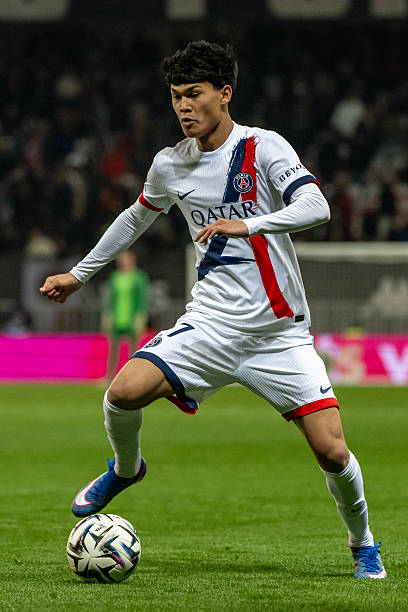
Dro entered the match in the 76th minute, replacing Nuno Mendes, and made an instant impact. Just five minutes later, he showcased his technical ability by beating a defender and calmly finishing past the goalkeeper, sparking celebrations among teammates and fans alike.
Fernandez slotted the ball into the bottom left corner, showcasing the fluid attacking rhythm PSG displayed, exchanging crisp one- and two-touch passes. The combination of the setup from Dembélé — PSG’s French international, a Barcelona graduate himself, playing a neat through ball — and Fernandez’s composed finish captured the essence of the Dro Fernandez PSG goal moment: technique in service of a collective rhythm, not an individual showboating. Dembélé set up Fernandez; Fernandez finished clinically; the connection between the Barcelona academic and the La Masia graduate was the thread that made the moment possible.
He celebrated alongside stars such as Ousmane Dembélé and Gonçalo Ramos, highlighting his seamless integration into the squad. That image — Dembélé and Ramos, Champions League winners and Ballon d’Or contenders, wrapping their arms around a teenager who joined the club less than two months ago — is the visual evidence of an integration that Enrique has been carefully managing since the January transfer.
2. Luis Enrique’s Reaction to the Dro Fernandez PSG Goal: A Coach Who Thinks About People
More Than Just Tactical Satisfaction
Speaking to Ligue 1+, the manager expressed his delight with the squad’s rotation and the forward’s milestone: “There are a lot of players who do not play a lot but who took advantage like Beraldo, Dro. I am happy. The joy over Dro’s goal? At 18 years old, scoring your first goal is important. I am very happy.”
The specific pairing of Dro with Beraldo — another young player making the most of limited minutes — is characteristic of Enrique’s management philosophy. He does not celebrate this goal in isolation but frames it within the collective principle: players who don’t play regularly can still make decisive contributions, and those contributions matter to the team’s bond as much as the goals of the regulars.
“This kind of victory strengthens team bond. It’s the key moment, the most important one, because it’s the moment to translate that into trophies. It’s the last international break before the World Cup, but as a team, the return will be important. I’ll wait to see how the players are doing.”
The phrase “team bond” is central to Enrique’s framing of the Nice victory as a whole. He is not a manager who separates tactical success from human connection. The 4-0 win is valuable because it puts PSG back at the top of Ligue 1. But it is also valuable because of what it does to the dressing room culture — the reinforcement of the belief that every player matters, that contributions from those outside the first-choice eleven are cherished rather than treated as statistical irrelevancies.
Enrique’s Earlier Assessment: “A Very Unique Player”
The Nice goal was not the first time Luis Enrique had spoken about Dro Fernandez in terms that go beyond the standard post-match compliment. Earlier this month, PSG head coach Luis Enrique shared his thoughts on the winter signing: “We are very happy that he is here. He has a different quality — he is a very unique player. He is exactly the type of footballer that coaches who appreciate attractive football want in their squad, because he knows how to combine with his teammates. And he possesses top-level individual qualities.”
That assessment — “a very unique player” — is deliberately specific. Enrique has seen hundreds of gifted teenagers in his coaching career. He does not use “unique” carelessly. What he is identifying in Dro Fernandez is a technical profile that is genuinely rare even at PSG’s level: the combination of elite individual quality and the instinctive collaborativeness, the ability to combine with teammates in tight spaces, that distinguishes footballers of exceptional football intelligence from those who are merely technically gifted.
“But he is only 18 years old, and it’s normal to face difficulties, especially in such a physically demanding league as Ligue 1. When he arrived, he said that many people consider Ligue 1 to be easy, but in reality, it’s not. I am very pleased with him — he is doing interesting things both for himself and for the team.”
The anecdote about Fernandez’s own observation — that people underestimate Ligue 1 — is revealing. It suggests a teenager with genuine humility and football intelligence, who arrived in France not with the presumption of an elite prospect who expects an easy transition but with the awareness that a new environment presents real challenges regardless of prior status. That self-awareness, and Enrique’s evident appreciation of it, is the human foundation of this story.
3. Who Is Dro Fernandez? The Complete Profile
Pedro Fernández Sarmiento — From Galicia to the Parc des Princes
Pedro Fernández Sarmiento (born 12 January 2008), known as Dro Fernández or simply Dro, is a Spanish professional footballer who plays as attacking midfielder or left winger for Ligue 1 club Paris Saint-Germain.
The name “Dro” — derived from his middle name “Pedro” and adopted as a football identity — has become, in the weeks since his January transfer, one of the most discussed new names in French football. Dro joined Val Minor at the age of 4. Here he was coached by former Barcelona player and scout Jose Antonio Covelo. The connection to a former Barcelona figure in his earliest football education was prescient — Covelo evidently recognised the specific technical profile that would make Dro a La Masia prospect worth pursuing.
Dro joined Barcelona’s academy in 2022, rejecting offers from Real Madrid and Real Betis. The rejection of Real Madrid is, in the context of a 14-year-old’s decision-making, a significant detail. It suggests a family unit — guided by Jose Antonio Covelo and their own football convictions — that made decisions based on sporting philosophy rather than maximum prestige. Real Madrid’s academy, while excellent, develops players in a different tradition from La Masia’s possession-based, technically intense environment. The Fernández family chose the latter, and the consequences of that choice are visible in the combination play and composure of the Nice goal.
The La Masia Years: Record-Breaking Youth Production
In the 2024–25 season, he played for the Juvenil B and Juvenil A teams, as well as in the UEFA Youth League. He made a total of 38 appearances: 19 in Juvenil B (7 goals), 12 in Juvenil A (3 goals), and 7 in the UEFA Youth League (2 goals).
The youth league statistics are particularly illuminating. Seven UEFA Youth League appearances at 16 years old, scoring twice against opponents who represent the elite of European youth football — this is the competitive benchmark at which Dro was already proving his quality before his first-team breakthrough. The Youth League was, for a generation of Barcelona graduates including Pedri and Gavi, the proving ground where elite prospects separated themselves from merely talented ones. Dro’s performances at that level confirmed what La Masia’s coaches had been saying internally: this was not a typical prospect. This was genuinely exceptional.
In July 2025, Dro was included in the Barcelona first team for the pre-season tour to Japan and South Korea under coach Hansi Flick. The specific nature of that inclusion — a pre-season tour to Asia, where Barcelona’s commercial obligations are significant and where the squad performs in front of massive crowds — placed Dro in exactly the kind of high-profile, high-pressure environment that reveals a teenager’s psychological readiness for first-team football.
The Barcelona First-Team Chapter: Brief But Significant
Before heading to the French capital, the teenager made five appearances for the Barcelona senior squad, registering one assist. Those five appearances — across a mix of La Liga, Copa del Rey, and Champions League fixtures — were sufficient to demonstrate that La Masia’s production line had delivered something genuinely special, but insufficient to establish Dro as a regular first-team contributor in a squad of Hansi Flick’s Barcelona’s depth.
The specific dynamics of Dro’s Barcelona situation are important context for understanding the PSG transfer. Flick’s Barcelona, in the 2025-26 season, possessed an embarrassment of creative attacking talent: Lamine Yamal, Dani Olmo, Ferran Torres, and the various other options fighting for the creative wide and central positions that Dro naturally occupies. Even a genuinely elite prospect would have found minutes difficult to secure in that environment — and the frustration of watching the first team from the bench, or from the stands, is precisely the kind of career stagnation that Covelo and the family sought to address through the January move.
4. The PSG Chapter: Two Months That Changed Everything
The January 26 Transfer: Why PSG Acted and Barcelona Accepted
On 26 January 2026, Dro signed for Ligue 1 club Paris Saint-Germain (PSG) on a contract until 2030. A transfer fee of €8.2 million was quoted in the media.
The €8.2 million fee for a player of Dro’s profile is, in the context of the current youth transfer market, modest almost to the point of embarrassment. For context: Said El Mala, a player two years older whose Bundesliga form has driven a bidding war at €40-50 million, was sold by his previous club for €225,000. Pedri cost Barcelona €5 million plus add-ons.
Gavi came through the academy on a nominal fee. The pattern of genuinely elite La Masia graduates being available at low fees at the point of their academy departure is well-established, and Barcelona’s need for financial flexibility — combined with the calculation that Dro would benefit more from regular first-team football elsewhere — made the deal viable at a fee that PSG will regard, in three years’ time, as one of the most inspired pieces of business in their history.
The First Days at PSG: Learning That “Ligue 1 Is Not Easy”
On 8 February, he made his debut for the club as a substitute in a 5–0 win over Marseille. The specific match context of his debut — a 5-0 Classique rout of PSG’s oldest rivals — could not have been more theatrical. A substitute at kickoff, the former Barcelona prospect entered the game in the 75th minute. He replaced Senny Mayulu in a fairly offensive right-sided box-to-box midfielder role and was very clean with all his touches. He especially delighted the Parc des Princes with a nice piece of technical skill, facing Pierre-Emile Hojbjerg, who was completely overwhelmed by his opponent’s mobility and finesse.
The Hojbjerg moment — a veteran, physical, highly experienced Premier League midfielder completely overwhelmed by an 18-year-old’s combination of pace and technical precision — became something of a social media event, circulating widely as evidence that Dro Fernandez was not a fringe acquisition but a genuine first-team talent capable of affecting high-profile matches even in his earliest minutes.
“It was my first match, and I am very happy,” said Dro Fernandez to PSG TV after the match. Simple, genuine, reflective — the words of someone experiencing something enormous for the first time, trying to process it in real time. The same quality that Luis Enrique identifies — the self-awareness, the humility, the football intelligence — is visible in that post-match sentence.
Building to the Goal: Six Appearances and Growing Confidence
This was Fernandez’s first for PSG in his sixth league appearance since joining on 26 January 2026 for a reported €8.2 million, on a contract running until 2030. Six appearances before the first goal — a period in which he was contributing without scoring, building his understanding of the system, developing the physical conditioning that Ligue 1’s intensity demands, and earning Enrique’s trust match by match. On February 25, he played his first Champions League match for the club against Monaco as a substitute, winning 5-4 in aggregate.
The Champions League appearance — against Monaco in the round-of-16 aggregate context — is particularly significant. Enrique does not give Champions League minutes to players who are not ready. That statement of trust preceded the Nice goal by less than a month.
5. The Dro Fernandez PSG Goal Player Profile: What Makes Him Special
The Technical Qualities That Made Enrique Say “Unique”
When Luis Enrique describes Dro as “a very unique player,” he is identifying a specific technical constellation that is genuinely rare. The combination of elite individual dribbling quality with the instinctive collaborative intelligence — “he knows how to combine with his teammates” — captures a profile that is common in La Masia’s best graduates but rare in the broader football population.
Dro Fernandez’s primary technical attributes, as identified by coaches at both Barcelona and PSG, include: an exceptional first touch that allows him to receive and control the ball in tight spaces without losing tempo; a natural understanding of positional play that reflects his La Masia education; the ability to dribble at defenders without losing the thread of the collective movement; a deft finishing quality, visible in the composed slot into the bottom corner at Nice; and the spatial intelligence to occupy the right position for late arrivals into the box when the collective rhythm creates the opportunity.
His movement off the ball and sharp instincts were key in making a strong impression. Head coach Luis Enrique praised the youngster, stating he was not surprised by his performance and emphasising how well he fits into the team’s system despite his age.
“Not surprised” — that specific phrase from Enrique is the fullest possible endorsement of a young player’s training-ground reality. The manager who says “I was not surprised” is the manager who has been watching a player in the week-to-week grind of preparation and knows, from that private observation, exactly what the player is capable of when given minutes in a match.
The Barcelona Comparison: Inheriting a Great Tradition
Every La Masia graduate arrives in senior football carrying the weight of comparison with the academy’s greatest alumni. For players of Dro’s generation, the specific precedent is the Pedri-Gavi era: two teenagers who joined Barcelona’s first team within months of each other, both demonstrating elite technical quality and collective intelligence from their very first appearances, both quickly establishing themselves as irreplaceable contributors to club and country.
Dro’s profile contains clear echoes of that tradition — the La Masia DNA of technical excellence and positional intelligence is visible in every clip of his training ground work and his first PSG appearances. Whether he will ultimately reach the level of Pedri or Gavi is a question whose answer lies years in the future. What the Dro Fernandez PSG goal confirmed is that he belongs at this level: that the technical quality visible in youth football has survived the transition to senior professional competition without dilution.
6. The PSG Context: What the 4-0 Win Means for the Title Race
Back on Top: The Ligue 1 Championship Situation
The reigning champions leapt above Lens to regain first place in the league standings following a comprehensive 4-0 away victory. The victory sees PSG top the Ligue 1 standings, with 60 points, a point more than second-place Lens who have played a game more.
The Dro Fernandez PSG goal arrived in a match of considerable Ligue 1 title significance. PSG and Lens have been engaged in the most competitive title race in French football in several seasons, and the margin between them — one point, with PSG having a game in hand — represents the thinnest of cushions at the most pressure-filled period of the campaign.
PSG has played one game less, and the sides meet on April 11 in Lens in what could be a title decider. That April 11 fixture — Lens hosting PSG in what could be the championship’s defining encounter — is the specific competitive backdrop against which every result in the coming weeks must be assessed. The Nice victory, and the Dro Fernandez PSG goal that sealed its comfortable nature, was a significant statement: PSG have the depth, the composure, and the individual quality to win comprehensively in difficult away environments, even with rotated squads.
The Champions League Dimension: Liverpool Awaits
Following the international break, they will host Toulouse on 3 April before shifting their focus to European action. A massive UEFA Champions League quarter-final clash awaits them, as they welcome English heavyweights Liverpool to the French capital on 8 April.
The Liverpool quarter-final — a rematch of last season’s semi-final thriller, now elevated to the quarter-final stage — is the European fixture that has been circling in PSG’s planning since the draw was made. Enrique’s framing of the Nice win in team-bond terms reflects a manager who understands that the Champions League knockout stage requires precisely the collective trust and individual confidence that a 4-0 Ligue 1 victory can build.
The Dro Fernandez PSG goal, in this Champions League context, carries a specific additional meaning: it demonstrates that PSG have genuine quality beyond their established first-choice lineup. A Kvaratskhelia, Barcola, Dembélé, Ramos front-four is already devastating. An 18-year-old from La Masia contributing from the bench, scoring PSG’s 100th goal of the season, represents a depth of attacking option that Liverpool — or any other Champions League rival — must account for in their preparation.
7. Behind the Dro Fernandez PSG Goal: The Personal Story From Galicia to Glory
A Family History That Makes the Football More Meaningful
Dro was born in Galicia, Spain to a Spanish father and a Filipino mother. His family was previously affected by events on 31 January 1992, when his grandfather, David Fernández, was among four people killed during a criminal attack at the family home.
That biographical detail — restrained in Wikipedia’s clinical language but carrying enormous personal weight — provides context for the human story behind the footballer. Dro Fernandez exists in a family history that has been shaped by tragedy and loss, and the specific warmth with which his coach, his teammates, and the PSG organisation speak about him reflects an awareness that the young man they have brought to Paris is carrying more than a football career.
Football, at its best, is not merely sport. It is the product of human lives, human choices, and human histories. When Luis Enrique says “At 18 years old, scoring your first goal is important. I am very happy,” he is not merely commenting on a statistic. He is acknowledging — however indirectly — that the Dro Fernandez PSG goal means something to a young man, his family, and everyone who has been part of his journey.
International Eligibility: The Spain-Philippines Question
Dro is a youth international for Galicia and Spain, having been called up to the Spain U17s for a set of 2025 UEFA European Under-17 Championship qualification matches in March 2025. In January 2026, the Philippine Football Federation publicly invited Dro to play for the Philippines.
The Philippines invitation — a consequence of his mother’s heritage — adds another dimension to the Dro Fernandez story. He is, by descent, eligible for three national identities: Spain, the Philippines, and Galicia (whose selection is FIFA-recognised for specific competitions). The Philippines’ invitation, made public in the same month as his PSG transfer, reflects the growing ambition of Asian federations to recruit diaspora players of world-class potential. Whether Dro ultimately commits to Spain’s full national team programme — the most naturally aligned option given his development and current profile — or explores the Philippines possibility remains a question whose answer will define an important chapter of his international career.
8. The Dro Fernandez PSG Goal Impact: What His Signing Means for Youth Football for PSG’s Academy
A Cultural Statement: Backing Young Talent
The signing of Dro Fernandez at €8.2 million is not merely a transfer market transaction. It is a cultural signal from PSG’s leadership about the kind of club they want to be — one that values genuine technical excellence over established reputation, that is willing to take meaningful risks on teenage talent from other academies, and that sees the development of young players as central to the project rather than peripheral to it.
The Dro Fernandez PSG goal — scored on his sixth league appearance, at 18 years and 68 days old, in a 4-0 win that sends PSG back to the top of Ligue 1 — is the most tangible return on that cultural investment. It is also, however, not without internal complexity: Samba Coulibaly, Martin James and other PSG youth players are reportedly hesitant to extend contracts after Dro Fernandez’s signing, a development that reflects the specific tension created when an external acquisition of talent is made into a pathway that homegrown players had assumed was available to them.
Managing that tension — between the development of internal talent and the targeted acquisition of external quality — is one of the less glamorous but genuinely important challenges facing PSG’s sporting department. The Dro Fernandez PSG goal is a headline achievement. The behind-the-scenes conversations with Coulibaly, James, and others about their futures are its less-celebrated but equally consequential complement.
Conclusion: A Goal That Signals a Beginning
The Dro Fernandez PSG goal in Nice on March 21, 2026, was, in the most literal sense, just one goal in a 4-0 away win for the Ligue 1 leaders. In every other sense, it was much more: the culmination of a two-month integration process, the validation of a transfer philosophy, the personal breakthrough of a teenager carrying one of football’s most exceptional technical profiles, and the specific moment that his manager — with genuine warmth and genuine conviction — identified as important enough to celebrate specifically and publicly.
Luis Enrique said “I am very happy.” The 18-year-old from Galicia who chose Barcelona over Real Madrid, who spent years mastering La Masia’s most demanding technical standards, who arrived in Paris in January with the self-awareness to acknowledge that Ligue 1 was harder than people thought — he was happy too. He celebrated alongside stars such as Ousmane Dembélé and Gonçalo Ramos, highlighting his seamless integration into the squad.
That image — the teenager and the veterans, the milestone and the collective — is the Dro Fernandez PSG goal story at its best. A beginning that feels, already, like the start of something genuinely significant.
9. The Barcelona Connection: Dembélé’s Role in the Dro Fernandez PSG Goal
A Meaningful Setup From One La Liga Graduate to Another
One of the most resonant details of the Dro Fernandez PSG goal is the identity of the man who provided the assist: Ousmane Dembélé. The French winger — who himself spent formative years at Barcelona before joining PSG — created the Dro Fernandez PSG goal with a characteristically incisive through ball that split the Nice defence and created the space for Fernandez to run onto and finish.
The Dembélé-Fernandez connection is not merely coincidental. Dembélé knows what it is to be a young Spanish-speaking talent navigating a Paris environment whose demands — cultural, linguistic, physical, tactical — are enormous. He knows the specific loneliness of the first weeks in a new country, and the specific joy of finding your feet in a system that genuinely values your qualities. When he set up the Dro Fernandez PSG goal, he was not merely executing a training-ground combination. He was, in some small but genuine way, passing something on.
That dimension of the moment — one Barcelona graduate enabling another, across a generational and career-stage gap — was not lost on Luis Enrique, whose characterisation of PSG’s collective spirit as one of the club’s primary assets in the title and Champions League run-in reflects a genuine belief in the human connections within his squad. The Dro Fernandez PSG goal celebration, with Dembélé embracing the teenager alongside Ramos and Zaïre-Emery, was the visible expression of a team culture that the manager has spent years building.
What Dembélé Told Dro: The Integration Process
The integration of a teenager at a club of PSG’s scale is not merely tactical. It is social, linguistic, and psychological. Dembélé — who has openly spoken about his own struggles to find the right environment during his Barcelona years — has reportedly been one of the key figures in Dro’s off-pitch settling-in process, sharing meals, introducing him to the rhythms of Paris life, and creating the kind of senior-to-junior mentorship that shortens adaptation periods from months to weeks.
Luis Enrique, who values collective cohesion above almost any other quality in his squads, has clearly structured these connections deliberately. The pairing of the established Spanish-speaking Barcelona graduate with the newly arrived Spanish teenager is not accidental — it is the product of a manager who understands that the social architecture of a dressing room is as important as its tactical architecture, and who invests in both with equal care.
10. What PSG’s Next Steps Look Like: Liverpool and the Title Run-In
April’s Defining Fixtures: Lens and Liverpool
The Dro Fernandez PSG goal came at a moment when PSG’s fixture schedule is approaching its most consequential phase. Following the international break, they will host Toulouse on 3 April before shifting their focus to European action. A massive UEFA Champions League quarter-final clash awaits them as they welcome English heavyweights Liverpool to the French capital on 8 April. Then, on April 11, the potential Ligue 1 title decider at Lens.
Three fixtures in two weeks. The challenge of that sequence is precisely why Enrique was so warm about the contributions of Dro and Beraldo in the Nice win. When you face Liverpool and Lens within four days of each other, every player who can contribute matters. The Nice performance gave Enrique specific confidence that his depth is genuine. A manager whose 18th player can score the 100th goal of the season at a difficult away venue can face Liverpool with real tactical flexibility.
Kvaratskhelia, Barcola, and the Front-Line That Beat Chelsea
PSG’s primary attacking weapons for the Liverpool tie will be the quartet that destroyed Chelsea 8-2 across two legs: Khvicha Kvaratskhelia, Bradley Barcola, Dembélé, and Gonçalo Ramos. This goal adds a specific dimension to Liverpool’s preparation: they must not merely account for the starters but must prepare for a substitute who can enter the game at any point and produce the kind of composed, technically assured finish that characterised the Nice goal.
Kvaratskhelia and Barcola combined for multiple goals against Chelsea across both legs, and the specific memory of their pace and directness in behind Chelsea’s high line will inform both Liverpool’s preparation and Enrique’s confidence in deploying similar tactical patterns against Slot’s side. The Dro Fernandez PSG goal is the most recent and the most personal data point in that preparation — a teenager arriving from the bench and immediately imposing himself on the game is exactly the kind of match-changing contribution that Liverpool’s management will be analysing in the days after the Nice result is processed.
11. The Bigger Picture: La Masia’s Global Reach
When Barcelona’s Academy Enriches French Football
The Dro Fernandez PSG goal carries a significance that extends beyond the individual achievement and the immediate Ligue 1 context. It is the latest piece of evidence that La Masia’s influence on global football development is not merely historical — the legend of Cruyff, of Guardiola, of Messi as a Catalan academy product — but ongoing and genuinely transformative for clubs and competitions across Europe and the world.
La Masia’s method — the specific emphasis on positional intelligence, technical excellence, collective play, and the development of footballers who understand the game rather than merely executing instructions — produces players who adapt to multiple systems and environments because the foundation of their learning is so comprehensive. The goal, slotted calmly into the bottom left corner after a Dembélé through ball, reflects those foundations: the technical composure to control and finish in a high-pressure moment, the positional intelligence to arrive at exactly the right place at exactly the right time, and the collective understanding to make the combination work.
For PSG, the acquisition of a La Masia graduate whose fundamental philosophy is grounded in the collective represents a subtle but significant cultural statement. Luis Enrique, himself formed in the Barcelona tradition as a player and now embedding that philosophy in his PSG project, recognises what Dro brings beyond the goals and assists. He brings a way of understanding football that is worth more than any individual statistic.
The Future: What Does Dro Fernandez Become?
The Dro Fernandez PSG goal is, by any reasonable measure, a beginning rather than an ending. At 18 years and 68 days old, with six league appearances and one goal, the trajectory of his development is the most interesting question in French football’s youth landscape. The contract until 2030 — when he will be 22 — gives PSG the security of a multi-year development platform while the release clause, if one exists, gives the player some insurance against a future mismatch.
Enrique’s assessment — “a very unique player” — is the most important external data point. Coaches of Enrique’s calibre do not use that phrase about players they regard as ordinary prospects. They use it about players whose specific combination of qualities is genuinely rare, whose ceiling is genuinely elite, and whose development they are invested in steering with particular care. The Nice goal was the first public confirmation of what Enrique has been telling PSG’s leadership privately: this signing is one of the best the club has made in years.
Whether Dro becomes a PSG regular, a superstar, or takes an unexpected path — Spain or Philippines, Paris or Madrid — are questions whose answers will emerge over years. What is already clear is that this story is worth following with the closest possible attention.


