

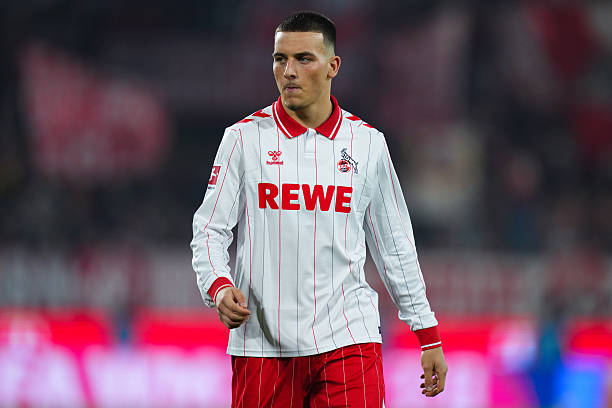
Introduction: The Most Delicious Subplot in European Football Right Now
In a transfer market full of compelling narratives, the one unfolding around Said El Mala is delivering something genuinely unique: a story in which the financial windfall from one of European football’s most hotly contested summer transfers will land, in part, at the feet of the last club you would expect to benefit. Viktoria Köln — Cologne’s third-division city rivals, a club separated from the Bundesliga giant by a chasm of resources, profile, and ambition — sold El Mala to 1. FC Köln in June 2024 for just €225,000. In doing so, they retained a 10% sell-on clause in his future transfer.
Now, with Chelsea reportedly preparing a formal offer of around €50 million, Brighton accelerating discussions with Cologne having tabled improved bids, Manchester United in the running, Barcelona positioning, Bayern Munich interested, Manchester City monitoring — and with the said El Mala transfer fee consensus sitting comfortably between €35 million and €50 million — Viktoria Köln are sitting on a ticket that could deliver them somewhere between €3.5 million and €5 million. For a 2. Bundesliga club of their scale, that is not a footnote. That is a transformative injection of capital.
The irony is almost too good. The club that sold their teenage star to their city rivals — to 1. FC Köln, the club they despise, the club their fans boo, the club that exists in the same city and occupies a position of institutional dominance that Viktoria have spent decades resenting — is now in line to benefit enormously from 1. FC Köln’s inevitable and imminent sale of that same player. Every fee increase as the bidding war intensifies, every added bonus clause that pushes the headline number higher, is more money in Viktoria’s pocket. The more desperately Chelsea, Brighton, United, and Barcelona want Said El Mala, the more their rivals smile.
1. Who Is Said El Mala? The Player at the Centre of It All
Born in Krefeld, Made in the Bundesliga
Said El Mala is, by any objective assessment, one of the most exciting teenage footballers in European football right now. Born on August 26, 2006, in Krefeld, Germany — making him 19 years old — the German-Lebanese winger has risen from the third division to the Bundesliga’s most-discussed young player in the space of eighteen extraordinary months. His mother Sabrina is German, his father Mohammed is Lebanese, and both work at Düsseldorf-based consumer goods company Henkel. His older brother Malek, 20, is also a professional footballer and has followed a parallel path through Viktoria and then to Cologne.
El Mala’s youth career took him from Linner SV — where his father also played — through a formative period at Borussia Mönchengladbach’s academy, where he developed his technical foundation before being released at 14. “It did feel a little bit like my world was ending,” he told the Bundesliga’s official channel. “I think I shed a few tears because you are ripped out of your environment and leave the boys who you have known for three years.” From Gladbach he went to TSV Meerbusch and then to Viktoria Köln — the club where, as he has said himself, he and Malek went hoping merely to be in the squad, and ended up becoming the first-team’s most important players.
The Viktoria Chapter: The Season That Changed Everything
The 2024-25 season at Viktoria Köln in the 3. Liga was the foundation of everything that follows in this story. He scored 13 goals in 32 appearances — a return of extraordinary quality for a teenager in professional football’s third tier — and was named the 3. Liga’s 2024-25 Newcomer of the Season. Those 13 goals were not soft goals against weak opposition: they were the product of a player with genuine technical quality, physical pace, and finishing ability operating at the maximum of a competition whose demands are significantly more testing than the youth football in which teenage prodigies are routinely celebrated.
El Mala also shone for Germany’s Under-19 side during their summer run to the semi-finals of the European Championship, contributing four goals and three assists. Germany head coach Julian Nagelsmann — a man whose track record of identifying and fast-tracking young talent to the national side is impeccable — was sufficiently impressed to call El Mala into the senior Germany squad in November 2025, after just nine Bundesliga appearances. “He is destined to become a top player,” Nagelsmann stated, in language that carries specific weight coming from a manager of his standing.
Lukas Podolski — Cologne legend, German World Cup winner, and a man who started his own career in the city — was characteristically direct in his assessment: “He just goes for it, and he gets things done. He’s on the move.” When Podolski speaks of a Cologne youngster in those terms, the city listens.
The Bundesliga Debut Season: Numbers That Demand Attention
El Mala’s debut Bundesliga season for 1. FC Köln has been exceptional by any reasonable benchmark. By the time of this article’s publication, he has scored nine goals and provided four assists in his first senior Bundesliga campaign — a contribution that places him among the most productive teenage debutants in the competition’s recent history.
His goals have not been ordinary. The brace in a 4-1 win against Hamburg, the strike in a 1-1 draw against Hamburger SV, the performances that earned him multiple Bundesliga team-of-the-week selections — these are the highlights of a campaign that, in its breadth and consistency, has made the Said El Mala transfer a matter of when rather than whether. Cologne coach Lukas Kwasniok was almost poetic in his assessment: “Someday, he will be sold for an incredible fee. That’s okay. But I have the feeling that right now he carries Cologne close to his heart, is enjoying his time here — and so are we.”
El Mala himself, interviewed by the Bundesliga’s official channel in November 2025, was equally warm about the club. “It was an easy decision,” he said of signing his contract extension until 2030. “We know what we have here and what the plan is with us. We feel very happy here in Cologne and we live here now as well, so it’s a lot of fun here.” The warmth is genuine. But the gravitational pull of Europe’s biggest clubs and the Premier League’s financial appeal are forces that warmth alone cannot indefinitely resist.
2. The Sell-On Clause: Viktoria Köln’s Golden Ticket
€225,000 In, Potentially €5 Million Back
The specific financial mechanics of the Viktoria Köln sell-on clause are the most delicious element of this entire saga. When 1. FC Köln signed El Mala from their city rivals in June 2024, they paid €225,000 — a fee that, at the time, reflected both the uncertainty inherent in any teenage transfer and the fact that Cologne were simultaneously dealing with a transfer ban that prevented them from registering El Mala immediately, requiring the unusual arrangement of loaning him straight back to Viktoria for the 2024-25 season.
In that transaction, Viktoria secured a 10% sell-on clause in El Mala’s future transfer. The arithmetic is straightforward and increasingly generous: at a sale price of €35 million, Viktoria receive €3.5 million. At €50 million, they receive €5 million. If the bidding war escalates above €50 million — which multiple reports suggest remains possible given the scale and intensity of the interest — the figure grows accordingly.
For a club of Viktoria Köln’s financial profile, operating in the 2. Bundesliga and managing on a fraction of 1. FC Köln’s resources, €3.5 to €5 million is not a marginal financial event. It is the kind of windfall that can fund a squad reinforcement in a single summer, clear a portion of accumulated debt, or fund the development infrastructure that mid-table second-division clubs chronically lack.
The Rival Dynamic: A Unique Kind of Football Irony
The specific irony of the Viktoria Köln windfall is that it emerges from the Said El Mala transfer to 1. FC Köln — the club that Viktoria supporters regard with the particular intensity that city derbies in German football generate. The Cologne-Viktoria rivalry is not among Europe’s most celebrated — the clubs operate at different levels, with Cologne’s Bundesliga presence dwarfing Viktoria’s periodic second-division campaigns — but its intensity, particularly from Viktoria’s perspective as the smaller club in a city dominated by a larger neighbour, is genuine.
The transaction that created the sell-on clause — Viktoria selling their most exciting talent to their biggest local rival — was itself a complicated moment. El Mala himself addressed it in his Bundesliga interview with characteristic diplomatic care: “I don’t think I’ve committed a crime in terms of the rivalry between the clubs because I didn’t leave Gladbach willingly.” His framing is revealing: the move from Mönchengladbach to Viktoria was not within his control, while the subsequent move from Viktoria to Cologne was — at least in part — a consequence of Cologne’s institutional superiority as a destination for the most talented players in the region.
Viktoria’s sporting directors at the time presumably viewed the sell-on clause as reasonable commercial insurance — a small share of a future upside that, in the normal run of teenage talent development, might produce a modest return. What they could not have predicted, with any certainty, was the speed and completeness of El Mala’s emergence as a genuinely elite prospect. The sell-on clause that looked like modest commercial prudence in June 2024 now looks like one of the best pieces of contractual thinking in German football’s recent history.
3. The Transfer Market: Who Wants Said El Mala?
Chelsea: The Latest to Enter the Race
The most recent and most significant development in the Said El Mala transfer story is Chelsea’s formal emergence as a contender. Chelsea are reportedly preparing their first formal transfer offer for FC Köln winger Said El Mala, potentially worth around €50 million. This represents a significant escalation from Chelsea’s earlier interest, which had been reported as exploratory rather than concrete.
Chelsea are exploring a double swoop by targeting El Mala’s brother Malek (20), as the siblings have always played together. The inclusion of Malek El Mala in Chelsea’s targeting strategy is a genuinely interesting development — it suggests that the club’s recruitment team has identified the brothers’ partnership as a component of the package, or that the family’s decision-making process is sufficiently intertwined that securing Said El Mala is more straightforward if the brother is also accommodated. Chelsea’s recent policy of recruiting top young players provides a philosophical framework for the said El Mala transfer that makes the move coherent with their broader recruitment strategy.
Chelsea’s specific need in the left attacking position — with questions persisting about the consistency of their current wide options and the apparent desire of manager Liam Rosenior to add pace and directness — makes El Mala’s profile a genuine tactical fit rather than a speculative acquisition. His ability to drift in from the left onto his favoured right foot, as Lukas Podolski and the Bundesliga profilers have noted, creates a specific and valuable variant on the traditional wide forward role.
Brighton: The First Mover Who Won’t Give Up
Brighton’s pursuit of El Mala is the most sustained and most documented story of this transfer saga. Brighton actually tried to sign El Mala during the summer but their €20 million bid was rejected by Cologne, who were convinced that his value was only going to rise. They were right: the subsequent rejection of a €25-30 million bid in the winter transfer window confirmed that Cologne’s confidence was well-founded.
Brighton’s persistence — they have reportedly done “some work on this deal” and remain in contention despite the escalating fee — reflects the club’s established philosophy of identifying elite young talent at market-beating prices and developing them toward a premium sale. The Brighton model, as executed under previous ownership, produced the likes of Marc Cucurella, Moises Caicedo, and Alexis Mac Allister — players who arrived at relatively modest fees and departed for multiples of their purchase price.
El Mala as a Brighton signing through the Said El Mala transfer, at a fee now escalating well above the club’s historical comfort zone, would represent either an ambitious strategic evolution or an overreach depending on whether the fee lands closer to €35 million or €50 million.
Brighton reportedly want to “wrap up the deal quickly” — language that suggests the Seagulls understand that the window for securing El Mala at a manageable fee is closing as each week of his impressive Bundesliga form adds another increment to Cologne’s valuation and another interested party to the bidding list.
Manchester United: Ready to Battle the Field
Manchester United are ready to battle Chelsea, Manchester City, Newcastle, Tottenham, and Barcelona for El Mala. United’s interest in the Said El Mala transfer is driven by a specific squad need: a wide forward of genuine Premier League and eventually Champions League quality, capable of operating at pace and with directness from the left side. Their experience with Alejandro Garnacho — inconsistent, talented, but not the transformative wide presence the club had hoped for — has reinforced the case for a different profile.
United’s specific window of opportunity in the bidding war is narrow, precisely because of the number and quality of competitors. If Chelsea make a formal offer at €50 million and Brighton simultaneously make their improved bid, United would need to move decisively and at a price premium to secure a player who has made clear his openness to Premier League football — with the British press citing Christian Falk’s reports that El Mala would be keen on a move to England’s top flight.
Barcelona, Bayern Munich, and Inter: The Continental Dimension
The Said El Mala transfer interest extends well beyond the Premier League. Top clubs from Bayern to Barcelona are positioning themselves for Said El Mala in the upcoming summer. Bayern Munich’s interest — which emerged as early as October 2025, when Cologne sporting director Thomas Kessler attempted to dismiss the interest as premature — is particularly significant given El Mala’s German nationality and his stated affiliation with the German football system.
According to Bild, Inter Milan is among the clubs interested in Said El Mala. Barcelona’s interest adds a further dimension — the player’s profile, combining pace, technical quality, and finishing from wide positions, fits the modern Barcelona forward mould. The breadth of interest — Premier League, Bundesliga, La Liga, and Serie A clubs simultaneously — is itself evidence of the scale of his reputation at 19 and of why the Said El Mala transfer is shaping up as the summer’s most contested bidding war.
4. Cologne’s Negotiating Position: Strong Enough to Name Their Price
The Contractual Shield: 2030 and No Release Clause
Cologne’s negotiating position is among the strongest of any selling club in the summer 2026 market. El Mala’s contract runs until 2030 and contains no release clause — a double protection that gives the Bundesliga club complete control over the timing and price of any departure. There is no automatic trigger that a buying club can activate. Cologne will not be forced into a transaction by player power alone. And the 2030 expiry date means they face no contractual urgency for at least four years.
Cologne are said to be realistic about El Mala’s future, with the report suggesting that they would be prepared to accept offers in the region of €50-60 million for the player’s signature. This is not a club in denial about the inevitable. It is a club that has prepared precisely for this moment — by securing the contract extension before the season began, by including the no-release-clause provision, and by publicly signalling a price range that, at €50-60 million, significantly exceeds what even the most ambitious early estimates had suggested.
The sporting director Thomas Kessler is joined in negotiations by new squad planner Tim Steidten, who was once under contract with West Ham in England — a detail that speaks to Cologne’s deliberate recruitment of executive talent with Premier League experience specifically in anticipation of the kind of negotiation that the transfer of this magnitude requires. This is a club that saw El Mala coming and prepared accordingly.
“They Know There’s Little Prospect of Him Staying”
The most honest and revealing assessment of Cologne’s internal position came from CaughtOffside’s Mark Brus, whose source told him: “They [Cologne] know there’s little prospect of him staying, and with so much interest they stand to make what they’ll see as a very good sale.” That phrase — “little prospect of him staying” — is the key to understanding why this transfer is a matter of when, not if. Cologne have squared their institutional circle: they extended the contract (protecting their valuation), extended it without a release clause (protecting their negotiating position), and are now managing an orderly sale process that maximises the return on their original €225,000 investment.
The return on that investment, at any fee between €35 million and €50 million, is among the most impressive in Bundesliga history. A 155-fold return in under two years — from €225,000 to €35 million — represents a finding of extraordinary talent at extraordinary value. Whether any credit for that value-creation attaches to Cologne’s own development work or whether it should be attributed more to the natural emergence of a talent that would have developed wherever it was situated is a question that different observers will answer differently. What is not in question is that Cologne will emerge from this transaction as one of the summer window’s most successful selling clubs.
5. The Player’s Perspective: What Does Said El Mala Want?
“I Carry Cologne Close to My Heart” — But For How Long?
El Mala’s own public position has been consistently warm toward Cologne and consistently open about the inevitability of a future move without specifically endorsing any destination. His coach Kwasniok’s observation that “he carries Cologne close to his heart” is borne out by the player’s own Bundesliga interview, in which his affection for the club and the city was genuinely expressed rather than diplomatically performed.
Yet the architecture of his situation — a 19-year-old with 13 goals and four assists in his debut Bundesliga season, Germany senior call-ups, multiple Champions League club interests, and the Premier League keenness confirmed by Christian Falk — makes an extended Cologne stay unlikely in practical terms. The gap between El Mala’s ambitions, which clearly extend to the highest levels of European club football, and what Cologne can offer — competitive Bundesliga football but no Champions League — is not one that a contract extension can bridge indefinitely.
Christian Falk has previously reported that El Mala would be keen on a move to the Premier League — a preference that, if genuine and sustained, would narrow the field in the Said El Mala transfer competition to the English clubs and potentially reduce the effective competition from Bayern, Barcelona, and Inter. A player whose destination preference is the Premier League is one whose value is maximised by the intensity of competition among English clubs, and whose move to a continental side would require either a change of preference or a package so compelling that the Premier League pull is overcome.
The Family Factor: A Tight Unit Making Decisions Together
One of the recurring themes in the reporting around this saga is the centrality of the family unit in his decision-making. Recent developments showed the family — now self-managing after parting ways with Footfeel — leaning favourably toward the Brighton project, potentially paving the way for serious talks if the English club meets or exceeds a €40-million valuation. The self-management detail is significant: it means there is no agent intermediary taking a percentage of the transaction and potentially pushing toward the highest-fee option regardless of other considerations. The family’s decision will be based on their own assessment of the right environment, the right project, and the right life context for both Said and, potentially, Malek.
The brother dimension — Chelsea’s interest in both El Mala siblings, the family’s desire to play together wherever possible — adds a specific variable to any bidding club’s calculation. A club that can accommodate both brothers is not merely signing a winger; it is offering a life arrangement that may be worth more to the decision-making unit than the difference between €5 million of competing salary offers.
6. Viktoria Köln: What the Windfall Would Mean
A 2. Bundesliga Club’s Unexpected Payday
To fully appreciate the significance of the Viktoria Köln windfall, it is necessary to understand the financial context in which a club at their level operates. The 2. Bundesliga — Germany’s second division — generates broadcast revenues and commercial income at a fraction of the Bundesliga’s levels, and clubs at Viktoria’s current standing operate on budgets that make every million of transfer income consequential.
A windfall of €3.5-5 million from this transaction would represent, at current Viktoria Köln budget levels, the equivalent of several months of operating revenue. In practical terms, it could fund one or two meaningful squad signings in the summer window, could reduce the club’s accumulated debt by a meaningful proportion, or could be reinvested in youth academy infrastructure that produces the next generation of El Mala-level talent. It is, quite simply, a significant amount of money for a club of Viktoria’s scale — money that arrives not through their own commercial or sporting effort but as a consequence of a contractual arrangement they had the foresight to negotiate two years ago.
The Poetic Justice of the Sell-On
There is something almost poetically just about the specific mechanics of the Said El Mala transfer windfall for Viktoria Köln. They are the club that created the early conditions for his development — that gave him the competitive platform and the environment to score 13 goals in a season of 3. Liga football, that were the context in which 1. FC Köln noticed him, and that were the football home he genuinely loved before the step up to the Bundesliga. The sell-on clause is, in this sense, an appropriate recognition of that contribution to his development — financial compensation for the role that Viktoria played in turning a released Mönchengladbach teenager into a Bundesliga star.
The fact that the financial compensation flows from their city rivals, and that every euro of the Said El Mala transfer fee is a euro that Cologne pay and Viktoria receive, is the ironic flourish that makes this particular subplot one of the most entertaining in the European football transfer market. Cologne want to maximise the fee. Viktoria want Cologne to maximise the fee. For this one glorious summer, the interests of the city’s two rival clubs are perfectly aligned. Both parties, in their very different ways, will be delighted when the deal is done.
7. The Comparison Pool: El Mala Among Europe’s Best Young Players
A Profile That Earns Comparisons With Kingsley Coman
The analytical work that European scouts have done on Said El Mala’s specific playing style is captured in a recurring comparison: there’s a touch of Bayern Munich’s Coman about El Mala. The comparison is genuinely instructive. Like Coman, El Mala thrives in open spaces, drives in off the left-hand side onto his favoured right foot, has the explosive burst of pace that makes defenders nervous even before the ball arrives, and combines that physical directness with a technical quality in close spaces that prevents him being simply a one-dimensional speed merchant.
The Coman comparison comes with a specific and ironic sub-text in the context of this transfer saga: Coman is currently a member of Bayern Munich’s Champions League squad, one of the clubs reportedly interested in El Mala. A club signing the next Coman by outbidding for the original Coman is a conceptual circularity that the football transfer market would appreciate.
The Statistics Context: How El Mala Compares to Recent Bundesliga Teenage Breakouts
El Mala’s nine goals and four assists in his debut Bundesliga season at 19 invite comparison with the most celebrated teenage debuts in the competition’s recent history. His debut season contribution places him ahead of Jude Bellingham’s first Dortmund season by goals scored, and comparable with the first-season returns of players like Jamal Musiala and Florian Wirtz — players who have since become generational talents valued in the hundreds of millions of euros.
The specific context of El Mala’s production — at a Cologne side that has fluctuated between the top half and bottom half of the Bundesliga table, without the systematic creative support of a Dortmund or Bayern squad — makes his individual numbers even more impressive. He is not merely a product of his environment; he is, in the most direct sense, transcending it.
8. The Timeline: When Does the Said El Mala Transfer Happen?
Summer 2026: The Window That Will Define His Career
The consensus across all reporting — from Bild to CaughtOffside to Goal.com to Tribuna — is that the Said El Mala transfer will happen in the summer 2026 window rather than January 2026 (when Cologne rejected the €30 million offer) or any future window. Cologne know there’s little prospect of him staying beyond this summer. The combination of interest breadth, fee expectations, and the player’s own trajectory all point to a conclusion between late June and late August 2026.
Don’t rule out some clubs waiting until next summer, though, as he’s still a raw talent and not everyone will be keen on that asking price — a caution issued by CaughtOffside’s source that has some validity but appears increasingly unlikely to determine the final outcome. The field of active clubs — Chelsea preparing a €50 million formal bid, Brighton accelerating discussions at €35 million plus bonuses, United and Man City monitoring, Barcelona and Bayern positioning — is too wide and too competitive for the deal to simply be deferred.
The timing of any formal agreement will depend on Cologne’s willingness to open negotiations before the window opens in late June, Brighton’s ability to find the financial headroom to match or exceed the €40-50 million range, and whether the family’s internal deliberations produce a clear destination preference that simplifies the competitive landscape. If Brighton can move most quickly and most decisively — and there is a strong feeling that they could end up being a stepping stone move for El Mala — the deal could be among the summer’s first significant completions.
Conclusion: A Transfer That Rewards Everyone — Including the Rivals
This story is, at its heart, a story about exceptional talent finding its moment and delivering a series of rewards that flow in all the directions you would expect — and one that nobody would have predicted. Cologne benefit from a transaction that multiplies their original investment by a factor that makes even the most successful modern transfer windows look modest. El Mala benefits from a move to a club that matches his ambition and provides the European platform his talent demands. Whichever buying club wins the bidding war benefits from the acquisition of one of European football’s most exciting teenage talents.
And Viktoria Köln — the arch-rivals who sold him, the club their supporters resent, the club that the people of Cologne associate with the smaller, grittier, fiercer side of the city’s football identity — they benefit from a €3.5 to €5 million windfall that arrives courtesy of their biggest local rival completing a transaction worth between 155 and 220 times what they received two years ago.
Football, as it occasionally proves, has a magnificent sense of irony. The Said El Mala transfer will be remembered for many things: the bidding war, the fee, the chosen destination, the debut goals in a new shirt. But the footnote that German football will savour longest is the one about Viktoria Köln, the arch-rivals, waiting for the cheque.
9. The Said El Mala Transfer and German Football: What His Rise Means for the Bundesliga
Developing World-Class Talent Without Losing It All
The Said El Mala transfer saga is, from a Bundesliga institutional perspective, one of the most instructive stories of recent seasons. German football has long faced the challenge of developing elite talent — the Bundesliga’s investment in youth academies is among the most comprehensive in Europe — only to see its best products depart to richer leagues the moment their market value crystallises. The Jamal Musiala and Florian Wirtz situations were the most recent high-profile examples: players who developed in the Bundesliga, reached their potential at their clubs, and then attracted Premier League, La Liga, and other interest that eventually overpowered the domestic competition.
El Mala’s case is a refinement of this pattern, but with a twist: he is 19 years old and already generating a consensus fee of €35-50 million. Most Bundesliga talents at this stage of their development — before a first full top-flight season, without a Champions League appearance — command fees significantly below this level. The breadth and depth of the interest in El Mala, and the specific size of the fees being discussed, reflects either the specific rarity of his talent profile or the increasingly globalised nature of a transfer market in which clubs from five or six leagues simultaneously compete for the same small pool of elite young players.
For the Bundesliga as a whole, the El Mala story is a double-edged sword. On one hand, the fact that Cologne — a mid-table Bundesliga club — can develop a €225,000 purchase into a €40 million-plus asset in under two years is a magnificent advertisement for the quality of football and development opportunities in Germany’s top flight. On the other hand, the inevitability of El Mala’s departure to the Premier League or La Liga reinforces the perception that the Bundesliga is a development league — a stepping stone to richer competitions — rather than a destination in itself.
What Bayern’s Interest Actually Tells Us
Bayern Munich’s interest in the Said El Mala transfer adds a specific and fascinating dimension to the Bundesliga angle. If the richest and most ambitious club in Germany is pursuing a Bundesliga teenager, they are implicitly acknowledging that the domestic transfer market offers genuine value at the elite end — that a player developed by a mid-table competitor can reach a quality level that Bayern’s scouts assess as worth €40-50 million plus.
The Bundesliga community would find a Bayern acquisition of El Mala preferable, from a developmental perspective, to a Premier League departure: the player would remain in German football, would face Champions League competition, and his trajectory would continue under conditions that the Bundesliga has the infrastructure to support. Whether the El Mala family and their self-managed representation would view a Bayern bid as competitive with the Premier League options being assembled is a separate question — the Premier League’s financial ecosystem makes matching Bayern’s package challenging even for the Allianz Arena’s resources.
10. The Said El Mala Transfer Fee Progression: From €20M to €50M in Eight Months
Viktoria Köln’s Foresight: A Lesson for Every Selling Club
The Viktoria Köln sell-on clause that will generate their windfall from the Said El Mala transfer is not a unique or particularly innovative contractual instrument — sell-on clauses are a standard tool in lower-division clubs’ negotiations with wealthier buyers. What makes the Viktoria clause notable is not its existence but its outcome: the specific trajectory of El Mala’s value, from €225,000 to €40 million-plus in under two years, is so extreme that even a 10% share produces a transformative return.
The lesson for every club selling young talent to wealthier competitors is straightforward: always negotiate a sell-on clause, always set it at the highest percentage the buyer will accept, and always apply it without time limit. A 10% perpetual sell-on clause on a €225,000 sale price seems modest at the moment of signing — €22,500 is a rounding error for a club like 1. FC Köln. The same clause applied to a €45 million second transfer produces €4.5 million for a club whose entire annual budget may not greatly exceed that.
The irony, in Viktoria’s case, is that they negotiated this protection against their own city rival — a rival who had the institutional weight to acquire El Mala but who could not control the subsequent development of a market that made their €225,000 investment look like the steal of the decade. Every euro that 1. FC Köln’s negotiating position has added to the eventual sale fee is another ten cents heading back across the city to the Cologne team in the lower division. It is beautiful, in its own entirely commercial way.
The Fee Progression: From €20 Million to €50 Million in Eight Months
The specific trajectory of the bids that Cologne have received for El Mala is one of the most instructive transfer market stories of the current cycle. Brighton submitted a €20 million bid in the summer of 2025 — before El Mala had made his Bundesliga debut, based on the 3. Liga Newcomer of the Season award and Germany U19 European Championship performances. Cologne rejected it, confident that the Bundesliga season would prove the player’s quality and raise the market’s assessment of his value.
They were right. Brighton returned in January 2026 with a bid in the €25-30 million range, apparently revised upward to reflect the opening months of the Bundesliga campaign. Cologne rejected that too. By the time Chelsea are now reportedly preparing a formal offer at around €50 million, and Brighton’s revised bid is said to involve €35 million plus bonuses, the cumulative fee appreciation since that first €20 million approach amounts to a doubling of market value in under a year.
For Viktoria Köln, this progression is a double gift: not only does their 10% sell-on apply to the eventual sale, but the trajectory of each rejected bid has mathematically increased the size of the eventual cheque. Every rejection by Cologne’s Thomas Kessler added to Viktoria’s windfall. The arch-rivals’ commercial hard-headedness has, paradoxically, served Viktoria’s financial interests at every turn.
11. The Said El Mala Transfer Value: The Technical Profile That Justifies €40-50 Million
What Makes Him Worth €40-50 Million at 19?
The question that any serious analysis of the Said El Mala transfer must answer is: what specifically justifies a fee of €40-50 million for a player who has completed less than one full Bundesliga season? The answer lies in a combination of physical attributes, technical skills, and the specific rarity of his talent profile in the current European market.
El Mala plays as a left winger who cuts inside onto his favoured right foot — the profile that the game’s most devastating wide forwards, from Arjen Robben to Mané to Salah, have deployed to such effect over the past fifteen years. His pace is exceptional — the kind of straight-line speed that requires defenders to retreat before they can engage, creating the separation that makes his technical qualities even more effective. His finishing, already demonstrated by nine Bundesliga goals in his debut season, is the quality that most sharply distinguishes him from the broader category of pacy wide forwards: he completes the move with the same assurance he applies to creating the opportunity.
The Coman comparison — a touch of Bayern Munich’s Coman about El Mala — is revealing precisely because Coman himself has been one of the most consistently valued wide forwards in world football for a decade. A player who draws that comparison from German football’s most credible observers at 19, before his first full top-flight season is complete, is a player whose ceiling is being assessed at a genuinely elite level.
Beyond the physical and technical attributes, El Mala demonstrates a maturity of decision-making that is unusual in a teenager. His movement without the ball — the curved runs that create space for overlapping defenders, the timing of his arrivals in goal-scoring positions — reflects a football intelligence that Kwasniok’s comment about “carrying Cologne close to his heart” does not fully capture. He is not merely a talent. He is a footballer who understands the game at a level that his age does not predict.


