

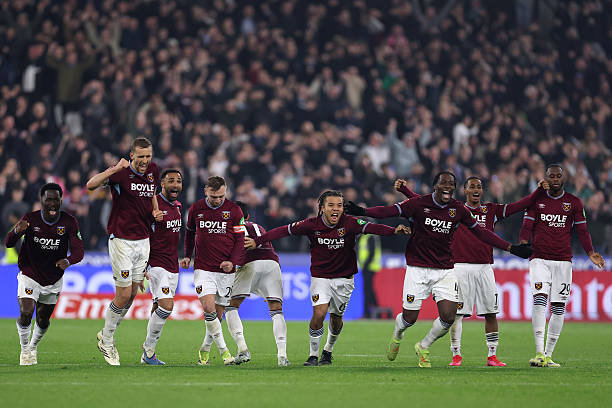
Introduction: The Confession That Cuts Right to the Heart of the Relegation Battle
There are some opinions in football that carry more weight than others — not because the person delivering them is the loudest in the room, but because of who they are, what they’ve lived through, and the unique position they occupy at the intersection of the clubs involved.
When Jermain Defoe speaks about the West Ham send Spurs down scenario currently gripping the Premier League, every syllable lands with the force of lived experience. Here is a man who started his career at West Ham, developed into one of the most feared strikers in England under the Upton Park floodlights, and then made the most controversial move possible — crossing the city to join Tottenham Hotspur in January 2004, just months after the Hammers’ relegation.
Defoe knows what relegation smells like from a West Ham perspective. He knows what Tottenham means to the east London faithful. And now, as both clubs find themselves locked in the most tense survival fight the Premier League has seen in years, the 43-year-old has offered a candid assessment that will send a chill through every White Hart Lane loyalist: West Ham will want to send Spurs down, and they have every motivation in the world to make it happen.
Defoe’s comments, delivered to The Sun and Hayters TV in separate interviews over the past fortnight, have crystallised the added emotional charge that hangs over this relegation battle. This is not merely a fight for Premier League survival — it is a battle steeped in London rivalry, in personal history, in decades of tribal contempt between east and north London.
And with the Hammers now in the form of their lives while Tottenham have descended into a catastrophic spiral under interim manager Igor Tudor, the prospect of the Irons finally delivering the knockout blow to their bitterest London rivals has never felt more real. The question of whether West Ham send Spurs down is no longer being whispered — it is being openly discussed, analysed, and, in some quarters, anticipated with barely concealed excitement.
This article takes a comprehensive look at every dimension of this extraordinary story — from Defoe’s own remarkable dual connection to both clubs, to the tactical and psychological analysis of what is happening on the pitch, to the broader financial and structural consequences that relegation would unleash on Tottenham. The Premier League’s most compelling storyline is entering its most dramatic act, and the West Ham send Spurs down narrative is at its very centre.
1. Jermain Defoe: The Man at the Middle of Two Football Worlds
A West Ham Boy Who Became a Spurs Legend
To understand the significance of Jermain Defoe’s comments about the West Ham send Spurs down prospect, you must first understand the man himself. Defoe was signed from Charlton Athletic as a teenager in 1999 for a fee of £1.6 million — a significant investment that signalled West Ham’s genuine belief in a young striker whose pace, movement, and finishing were already marking him out as something special. He came through the academy at Upton Park during one of the most exciting periods in the club’s recent history, rubbing shoulders with future stars like Joe Cole, Michael Carrick, and Frank Lampard in a generation that remains the most talented the club has ever produced.
His breakthrough season in 2001–02 was marked by 14 goals from the substitute’s bench — a remarkable tally that announced him as one of the brightest young strikers in English football. By 2002–03, despite being unable to prevent the Hammers’ relegation to the Championship, Defoe had established himself as a first-team regular and one of the first names on the team sheet. His 11 goals that season represented genuine quality in a team that was falling apart around him.
And then came the decision that would define his public image at West Ham forever. Within 24 hours of the club’s relegation being confirmed, Defoe submitted a transfer request. The backlash was ferocious — supporters who had watched him grow up as one of their own felt personally betrayed. By January 2004, he had completed a move to Tottenham Hotspur in exchange for Bobby Zamora, and in doing so, Defoe crossed the line that many West Ham fans considered uncrossable. He had not merely left their club — he had left for their rivals.
From Pantomime Villain to Respected Analyst
The years that followed were complicated. Defoe went on to have an outstanding career at Spurs across two separate spells, scoring more than 140 goals for the north London club and becoming one of the most prolific Premier League strikers of his generation. He celebrated goals against West Ham with evident relish, which only deepened the wound. Yet time, as it invariably does in football, has softened the edges of that story. Defoe has spoken in recent years about his regret over the timing of that transfer request, acknowledging that he handled the situation poorly even if the decision to seek a move was understandable.
Now retired from playing and working as a pundit and analyst, Defoe occupies a genuinely unique position. He has skin in both games — a former West Ham academy product who loves the club he grew up at, and a Tottenham legend who cannot be indifferent to the fate of the club where he scored 143 goals and won the fans’ respect many times over. When he speaks about the West Ham send Spurs down scenario, therefore, he speaks from a place of genuine conflict. And what he has said has been both honest and, for Spurs fans, deeply unsettling.
2. What Defoe Actually Said: Breaking Down the Key Quotes
“There Is Nowhere to Hide” — The Hayters TV Interview
Speaking to Hayters TV at the London Football Awards, Defoe was asked directly whether Tottenham could avoid relegation. His response was unambiguous in its assessment of where the momentum currently lies. Acknowledging that West Ham, Leeds, and Nottingham Forest had all found a “bit of momentum” and “a bit of confidence,” Defoe warned the Spurs squad in the starkest of terms: there is nowhere to hide now, and the reality is they are in a relegation fight where they will have to find something to get out of it.
Those words — “nowhere to hide” — carry particular resonance coming from someone who knows exactly what it feels like to be at the wrong end of a relegation battle. Defoe lived through it at West Ham in 2003. He knows the mental paralysis that can set in when results do not come, when the crowd turns, when the press speculates daily about the club’s Championship future. And his assessment is that Tottenham are displaying precisely the symptoms of a club in psychological freefall.
“It Would Be Catastrophic” — The Sun Interview
Defoe’s comments to The Sun were even more striking in their directness. Acknowledging that the prospect of Tottenham’s relegation is “absolutely unbelievable” and “absolutely ridiculous,” he nonetheless refused to pretend it is impossible. He called it “catastrophic” — a word that carries enormous weight from a man who scored 143 goals for the club. He highlighted that West Ham, under Nuno Espirito Santo, have “improved so much” and have developed “a little bit of fight, a little bit of spirit and momentum” that makes them a genuine and formidable threat to escape the drop.
Crucially, Defoe also hinted at the added dimension that makes the West Ham send Spurs down scenario so loaded with significance: he noted that West Ham’s recent form and momentum means they have a very real chance of engineering exactly the result that would simultaneously save themselves and condemn their London rivals. He stopped short of saying explicitly that West Ham want to send Spurs down — such a direct declaration of malice would be extraordinary from a former player — but the implication was unmistakeable to anyone with knowledge of the bitter history between the two clubs.
The Instagram Message: “Growing With Confidence”
Perhaps most revealingly, Defoe shared a personal message via his Instagram account following West Ham’s draw with Bournemouth in which he praised the Hammers for “growing with confidence game by game.” Coming from a former West Ham academy product who had been commenting on the situation for weeks, this was a significant emotional signal. Defoe is not neutral. He cannot be neutral. And when he praises the Hammers’ development with evident warmth, while simultaneously warning Spurs that they have “nowhere to hide,” he is — consciously or not — feeding the narrative of the West Ham send Spurs down story that has taken over the Premier League conversation.
3. The Relegation Table: Where Things Stand Right Now
A Three-Club Battle at the Bottom
As of March 13, 2026, the Premier League relegation picture has taken on the shape of a genuine three-club fight for the final survival spot, with Wolves and Burnley considered all but certain to occupy two of the three relegation places. The fight for the remaining spot — and the corresponding battle to avoid it — has crystallised around West Ham, Nottingham Forest, and Tottenham, with Leeds United slightly more comfortable but by no means safe.
The current standings among the relevant clubs make for fascinating reading. West Ham sit 18th, occupying the final relegation position with 28 points, separated from Forest in 17th by goal difference alone. Tottenham are in 16th, a single point above the bottom three on 29 points. Leeds United in 15th have 31 points, providing marginally more breathing room. The closeness of this battle means that a single weekend’s results can transform the picture entirely — as has happened repeatedly over the past two months.
What makes the West Ham send Spurs down narrative so compelling is the relative trajectory of the clubs involved. West Ham have taken 12 more points than Spurs since mid-January, an extraordinary turnaround that reflects both the Hammers’ resurgence under Nuno Espirito Santo and Tottenham’s catastrophic collapse. Opta’s supercomputer currently gives West Ham a 48.9% chance of relegation, Nottingham Forest 26.4%, and Tottenham 16.8% — figures that would have been considered unthinkable just eight weeks ago when the Hammers appeared doomed.
The Defining Moment: West Ham’s Win at Spurs
The spark that ignited West Ham’s revival and simultaneously lit the fuse under Tottenham’s crisis was, with beautiful symmetry, a West Ham victory at the Tottenham Hotspur Stadium. That 1–0 win against Spurs in late January was, as multiple journalists have noted, the moment everything changed. West Ham found their belief, their momentum, and their identity in a performance that simultaneously crushed Spurs’ confidence and revived the Hammers’ season. The West Ham send Spurs down story was born in those 90 minutes at the gleaming stadium in north London.
Since that match, the contrast in form has been staggering. West Ham have taken 12 points from their subsequent league games, playing with the directness, spirit, and collective purpose that Nuno Espirito Santo has worked tirelessly to instil since his appointment. Tottenham, by contrast, have descended into a chaos that claimed Thomas Frank’s job and has now placed his successor Igor Tudor under severe pressure after three consecutive defeats.
4. Tottenham’s Crisis: How the Unthinkable Became the Inevitable
From Thomas Frank to Igor Tudor: A Season of Mismanagement
Tottenham’s 2025–26 season will be studied in football management schools for years to come as a case study in how catastrophically wrong things can go when the alignment between squad, manager, and club leadership breaks down completely. Thomas Frank arrived at the club with genuine credentials — the Dane had transformed Brentford from a Championship club into established Premier League outfit through meticulous tactical work and culture-building — but found himself utterly unable to transfer those methods to a squad of vastly more expensive players with vastly higher self-regard.
Frank’s tenure was characterised by an inability to win against the sides around them at the bottom of the table. Spurs failed to beat Burnley away from home when they needed to. They drew with Wolves at home when a win would have provided a crucial buffer. They lost to West Ham and Forest — the very clubs now threatening to relegate them — in matches that, at the time, seemed like mere stumbles rather than the defining turning points they proved to be. By the time Frank was dismissed, Spurs had one win from their previous eight league games and had fallen to within touching distance of the relegation zone.
Igor Tudor’s arrival was heralded as a short-term emergency measure — a tactically astute, physically demanding Croatian manager with a track record of instant impact at clubs like Lazio and Juventus. That track record has, so far, shown zero sign of manifesting at Tottenham. Tudor has lost all three of his Premier League matches in charge, including a humiliating 3–1 home defeat to Crystal Palace that served as the nadir of an already nightmarish season. His demeanour in press conferences — at turns combative, philosophical, and detached — has not inspired confidence, and former Spurs midfielder Jamie O’Hara has already publicly suggested Tudor could be dismissed if results do not improve immediately.
The Injury Crisis: Real Mitigating Factor or Convenient Excuse?
Any fair assessment of Tottenham’s season must acknowledge the scale of their injury problems. Key players including Micky van de Ven — who picked up a suspension after being sent off in the Crystal Palace defeat — have been unavailable for extended periods, and the depth of quality in the Spurs squad has been tested beyond its limits. Tudor himself has pointed to the injury situation as the primary context for his poor results, and there is genuine merit in this argument.
Yet former West Ham and Spurs striker Jeremie Aliadiere — who, unlike Defoe, played for both clubs during their bitter rivalry in the mid-2000s — offered a more penetrating analysis when speaking to GOAL. He argued that the real problem at Tottenham is not injuries but mentality: Spurs have players who think they are “too good to get relegated,” and that attitude — a failure to fully embrace the existential emergency confronting them — is far more damaging than any number of absent bodies. Aliadiere drew a direct contrast with West Ham, whose players have shown exactly the kind of desperate, collective determination that relegation fights demand.
The Champions League Paradox
One of the most bizarre subplots of Tottenham’s season is the gulf between their performances in Europe and their form in the league. While stumbling to 11 consecutive Premier League games without a win — the worst such run since October 1975 under Terry Neill — Spurs have somehow remained competitive in the Champions League, reaching the last 16 before their exit to Atlético Madrid. Igor Tudor himself has acknowledged this paradox: it is, as he told assembled journalists, “like one extreme to another,” a peculiar split personality that has baffled analysts and supporters alike.
The Champions League distraction, some have argued, has actually been damaging to Spurs’ survival chances. Resources — physical, psychological, and logistical — have been diverted toward European ambition at precisely the moment when every ounce of energy should be focused on Premier League survival. Whether that is a fair criticism of Tudor’s management or an unfair oversimplification of a complex situation remains debated, but the statistical reality is inescapable: Spurs’ league form under both Frank and Tudor has been bottom-three quality, and the West Ham send Spurs down scenario is now a very real possibility.
5. West Ham’s Resurrection: Nuno’s Miracle on the Thames
From Seven Points Adrift to Genuine Contenders for Survival
The West Ham story of the second half of the 2025–26 season is nothing short of remarkable. As recently as early January 2026, the Hammers were seven points adrift of safety, had just suffered a 2–1 home defeat to Nottingham Forest that pushed their relegation probability above 88 per cent, and appeared to have no realistic path back to Premier League safety. The mood around the London Stadium was one of resigned despair — a club that had gone from Conference League champions to Championship-bound in the space of three seasons.
What followed was one of the most dramatic reversals of fortune in recent Premier League history. Nuno Espirito Santo, appointed in the summer to replace the departing David Moyes successor, had spent months painstakingly rebuilding the team’s defensive structure, their tactical organisation, and — perhaps most critically — their collective belief. The process was agonisingly slow through the first half of the season, but the seeds sown in those early months of quiet, unglamorous work have now blossomed into something genuinely compelling.
West Ham have taken 12 more points than Tottenham since mid-January. They have beaten or drawn with clubs above them in the table. They have won at Fulham, beaten Sunderland, and drawn creditably with Manchester City and Bournemouth. Each result has added another layer of confidence to a group of players who now visibly believe in what they are doing and in each other. The West Ham send Spurs down narrative is not merely wishful thinking from east London — it is grounded in a very real and very striking statistical reality.
Crysencio Summerville: The Man Who Could Seal Spurs’ Fate
At the heart of West Ham’s revival is Crysencio Summerville, the 24-year-old Dutch winger whose journey from early-season disappointment to genuine match-winner has been one of the Premier League’s most compelling individual stories. The £35 million signing from Leeds United initially struggled to justify his fee, enduring months of mediocre form that seemed to confirm the sceptics who doubted his ability to perform consistently at the top level. Then, in February 2026, something clicked.
Summerville has scored seven goals in his last ten games in all competitions and has been named in the BBC Sport team of the week multiple times. Former Premier League striker Troy Deeney — himself a pundit with no particular allegiance to either club — has speculated that Summerville “could be the reason” Tottenham get relegated, a remarkable statement that captures just how transformative the Dutchman’s form has been. The carrot of a place in Holland’s World Cup squad is reportedly sharpening his focus further, providing the kind of external motivation that can turn good form into genuine greatness.
Alongside Summerville, captain Jarrod Bowen — who has spoken openly about how much he has “hated” the situation West Ham have found themselves in — has rediscovered the form that made him one of the most feared forwards in the division two seasons ago. Bowen’s goals and assists in recent weeks have been decisive, and his leadership of the dressing room during the darkest period of the season has been widely credited as a crucial factor in the turnaround.
Nuno’s Tactical Evolution
What Nuno Espirito Santo has achieved at West Ham deserves more analytical attention than it has received. The Portuguese manager, who had his reputation tarnished during a difficult spell at Tottenham under different circumstances several years ago, has built a team that is remarkably difficult to beat. West Ham’s defensive record has improved dramatically since the turn of the year, with the back four — now settled, organised, and tactically disciplined — conceding a fraction of the goals they let in during the dismal first half of the campaign.
Offensively, Nuno has found a system that suits his personnel. The 4-2-3-1 structure, with Summerville and Bowen providing width and directness from wide positions and Lucas Paquetá threading passes from deep, gives West Ham attacking options that teams down to ten men struggle to contain. This is not the most sophisticated football in the Premier League, but in a survival fight, sophisticated is beside the point. Direct, fast, organised, and hungry — these are the qualities that win relegation battles, and West Ham currently possess all of them in abundance.
6. The London Derby Dimension: Why Rivalry Adds Rocket Fuel
East London Versus North London: Centuries of Contempt
It would be wrong to analyse the West Ham send Spurs down narrative without properly accounting for the emotional and cultural weight of the rivalry between these two clubs. West Ham and Tottenham are not natural derby opponents in the way that Manchester United and City, or Arsenal and Spurs, are. Geographically, they are separated by a reasonable stretch of London. Historically, they have not always competed in the same social or footballing tier. Yet a fierce rivalry has developed over decades, built on Cup clashes, title races, and the shared narrative of two clubs perpetually contending for the status of London’s third football force.
For West Ham supporters, there are few things in football that would bring more satisfaction than sending Tottenham down. The prospect is not merely a footballing outcome but a cultural statement — a declaration that the Hammers, despite their own struggles, are too strong and too proud to be brushed aside by a club they consider to have ideas far above their station. The chants of “we’re coming for you, Tottenham Hotspur, we’re coming for you” that rang around Craven Cottage after West Ham’s Fulham win captured that sentiment perfectly.
Defoe’s Admission: The Rivalry Adds Motivation
When Jermain Defoe speaks about West Ham’s form and momentum, he is not speaking in a vacuum. He knows, better than almost anyone, what this rivalry means to the West Ham dressing room. He experienced it as a player — the extra edge, the heightened intensity, the way that games involving these two clubs carry a charge that even some of the more glamorous fixtures cannot match. His implicit acknowledgement that West Ham will have extra motivation when contemplating the prospect of sending Spurs down is, coming from him, an extraordinary admission.
Harry Redknapp — who managed both clubs during his career and whose knowledge of both dressing rooms is encyclopedic — has made similar observations. Speaking on talkSPORT, Redknapp observed that West Ham are “starting to believe” and that their supporters are “amazing,” providing the kind of atmospheric backdrop that can be the difference in survival battles. His assessment that Tottenham are “bang in it” and that the situation is now genuinely serious stands in stark contrast to the official optimism coming from Tottenham’s own camp.
7. The Financial Catastrophe That Awaits Tottenham If They Go Down
A £1 Billion Stadium in the Championship
Perhaps the most extraordinary aspect of the Tottenham relegation story is the financial context. When Daniel Levy borrowed hundreds of millions of pounds to finance the construction of the £1 billion-plus Tottenham Hotspur Stadium — one of the most spectacular football venues ever built — nobody involved in those negotiations contemplated for a single moment that the club might be playing Championship football while making the repayments.
Former Aston Villa CEO Christian Purslow — whose experience of football finance at the highest level makes him one of the most authoritative voices on such matters — has been forensic in his analysis on The Football Boardroom podcast. The banks that financed Spurs’ stadium project, he explained, made their calculations based on Premier League revenues of £600–700 million per season. In the Championship, those revenues drop to £300–350 million.
Nobody involved ever contemplated a scenario where the difference is not the relatively manageable £20–30 million between fourth and 15th place, but a potentially catastrophic £200–250 million shortfall that would fundamentally threaten the club’s financial model. In the event of relegation, Purslow concluded, those banks will want to see equity invested by the owners — and not just a little of it.
The Sale of the Club Goes Out the Window
Purslow also identified another dimension of the financial catastrophe that would befall Spurs in the event of relegation: the prospect of selling the club — which has been discussed in boardroom circles for some time — would effectively become impossible. Any buyer willing to pay a premium for a Premier League club would not pay the same for a Championship outfit with £700 million of stadium debt and a squad of players with Premier League wages. The West Ham send Spurs down scenario, should it come to pass, would therefore not merely be a footballing humiliation — it could be the trigger for a decade-long financial reconstruction whose pain extends far beyond the football pitch.
8. The Remaining Fixtures: Who Has the Harder Run-In?
Tottenham’s Nightmare Schedule
The fixture computer has not been kind to Tottenham as the season enters its final straight. Their remaining nine games include a trip to Anfield to face Liverpool — with Micky van de Ven suspended — a home game against Nottingham Forest on March 22, and a visit to Wolves on April 25. The schedule does include some potentially winnable fixtures, but the pattern of Spurs’ entire season — failing to beat teams they should beat — makes even those games look like potential banana skins.
The Premier League’s relegation fixtures calculator makes for grim reading from a Spurs perspective. They face Liverpool this weekend, when a defeat would drop them into the bottom three. West Ham, meanwhile, face Manchester City — who have their own motivation issues after a disappointing season — in a game that the prediction models suggest could yield a surprise point for the Hammers.
West Ham’s Winnable Run-In
By contrast, West Ham’s remaining fixtures offer genuine hope. While they must navigate games against Manchester City and Arsenal, the bulk of their run-in includes teams they should be capable of matching or beating. Their fixture against Wolves on April 10 looks, on paper, like a genuine six-pointer given the Midlands club’s near-certain relegation. The final-day fixture against Leeds on May 24 could, in the most dramatic of scenarios, be the game that decides everything.
The simulation run by FootballWebPages projects that the current form patterns, if maintained through the run-in, would see West Ham survive — primarily at Tottenham’s expense. That is, of course, exactly the scenario that makes the West Ham send Spurs down story the most compelling narrative in English football right now.
9. Other Voices: The Punditry Consensus
Harry Redknapp: “Tottenham Are Bang In It”
Harry Redknapp — one of the most beloved figures in both clubs’ recent histories, having managed West Ham in the early 1990s and then gone on to lead Spurs to some of their most successful campaigns in decades — has been uncharacteristically blunt in his assessment of Tottenham’s situation.
Speaking on talkSPORT, he admitted that just four or five weeks ago he could not see Spurs being involved in a relegation scrap, but that every week has brought further deterioration and that they are now “bang in it.” His observation that West Ham “did look dead and buried five weeks ago” but could now get themselves out of trouble serves as both tribute to the Hammers’ revival and a stark warning for Spurs.
Jeremie Aliadiere: A Unique Dual Perspective
Jeremie Aliadiere — the French striker who played for both Arsenal and West Ham during his career — offered perhaps the most incisive analysis when speaking to GOAL. His diagnosis of Tottenham’s core problem — players who think they are too good to get relegated — is worth examining in detail.
Aliadiere argued that the mentality required to survive a relegation fight is fundamentally different from the mentality that gets players to the top level in the first place. Survival requires collective selflessness, fierce determination, and a willingness to embrace unglamorous football. It requires players to fight for each other and for the badge, not for their next contract or their next big move. And his implication was clear: too many Tottenham players have yet to make that mental adjustment.
Ange Postecoglou’s Pointed Warning
Even Ange Postecoglou — who managed Spurs last season and led them to their first major trophy in 17 years with Europa League glory — could not resist commenting on the crisis engulfing his former employers. The Australian, while careful not to appear to be revelling in their misfortune, was characteristically direct: the Premier League leaves no room for errors once you take your eye off certain things, and the club’s current position demands that Premier League survival is treated as absolutely paramount. His use of the phrase “slippery slope” to describe Spurs’ trajectory was notable from a man who knows the club’s inner workings intimately.
10. What Happens Next: The Scenarios That Will Define the Season
Scenario One: West Ham Send Spurs Down
The scenario that West Ham supporters dare to dream about, and that Defoe’s comments have implicitly endorsed as a genuine possibility, would see the Hammers accumulate enough points over the final nine games to escape the bottom three while Tottenham fail to arrest their slide. The West Ham send Spurs down outcome would require a continuation of roughly the same form differential between the two clubs that has persisted since mid-January.
Given the psychological momentum currently favouring West Ham, this is far from an implausible scenario. Spurs’ upcoming fixture at Anfield represents a particularly dangerous moment — a defeat there, combined with West Ham getting any kind of result against Manchester City, would see the Hammers move above their rivals for the first time.
Scenario Two: Spurs Rediscover Their Identity and Survive
The counter-narrative — and it must be given fair consideration — is that Tottenham’s squad, despite its current malaise, contains quality that should be sufficient to accumulate enough points from their remaining fixtures. The players who have been absent through injury — notably van de Ven, whose athleticism and recovery speed make him one of the most important defenders in the squad — could, if they return in time, transform Spurs’ defensive resilience and give Tudor’s side a platform to build winning performances. The away form that has been one of the few positives of Tottenham’s season — they are, remarkably, in the top half of the away table — could yet be the saving grace if the right results come on the road.
Scenario Three: A Final-Day Decider
The most dramatic possibility of all — and the one that the Premier League must secretly hope for, given its potential for unprecedented theatre — is that the relegation situation remains unresolved until the final weekend of the season on May 24. West Ham host Leeds on that day; Wolves host Burnley. If the situation is still undecided by then, the London Stadium could witness one of the most emotionally charged ninety minutes in its short history, with the fate of multiple clubs hinging on events across multiple venues simultaneously.
11. The Bigger Picture: What Relegation Would Mean for Both Clubs
West Ham’s Existential Stakes
For West Ham, the consequences of relegation extend far beyond football. The club’s recent accounts, as highlighted by Christian Purslow, contain an auditors’ note identifying the need for significant “liquidity” — a technical term that translates, in plain English, as the need for a major cash injection. In the Premier League, that injection can come from broadcast revenue, player sales, and commercial partnerships. In the Championship, those sources of income diminish dramatically, and the club’s ownership would face choices of staggering financial difficulty.
The Olympic Stadium — home to West Ham since 2016 and the source of persistent controversy about its suitability as a football venue — would become the most curious landmark in the second tier of English football. Former Spurs midfielder Jamie O’Hara has suggested, provocatively, that West Ham should be required to vacate the ground if relegated, arguing that it is unacceptable for a venue built for a global sporting showcase to host Championship football. The logistics of such a scenario are obviously fantastical, but the cultural point O’Hara was making about the dissonance between the club’s infrastructure and its current situation is a real one.
For Defoe: A Painful But Unavoidable Truth
For Jermain Defoe personally, the West Ham send Spurs down outcome would be deeply conflicting. He has been transparent about caring for both clubs — about wanting West Ham to survive and wanting Tottenham to do the same. Such sentimentality is, in the cold arithmetic of a Premier League relegation battle, a luxury neither club can afford. When he says there is “nowhere to hide” for the Spurs players, and when he praises West Ham’s growing confidence with unmistakeable warmth, he is acknowledging — with the honesty that has always characterised his public persona — that the Hammers have earned the right to dream about the outcome that would be most satisfying for their supporters.
West Ham want to send Spurs down. Defoe knows it. Defoe has, in his carefully chosen words, admitted it. And as the Premier League’s most dramatic relegation battle of the modern era enters its defining final weeks, that admission carries the weight of truth from a man who has seen this rivalry from both sides of the divide.
12. The Psychology of the Relegation Fight: Why the West Ham Send Spurs Down Narrative Matters
Belief as a Tangible Football Asset
Football analysts have increasingly focused on the role that psychological momentum plays in high-pressure situations like relegation battles. The West Ham send Spurs down story is not merely a media construct or a fan fantasy — it is, according to those who study team dynamics, a genuinely significant motivational factor that can influence on-pitch performance in concrete and measurable ways. When a group of players has a clear narrative of purpose — not just survival, but survival at the direct expense of a rival — it creates a form of collective motivation that transcends individual self-interest and transforms into something closer to tribal duty.
West Ham’s players do not need a sports psychologist to tell them this. Jarrod Bowen has spoken openly about how much the situation has affected him emotionally, and how it has galvanised the dressing room. Crysencio Summerville — playing the best football of his career — has the additional motivational driver of a World Cup squad place on the horizon. Nuno Espirito Santo, who has navigated relegation battles in his managerial career and knows precisely how to handle them, has carefully cultivated this collective sense of shared mission. The West Ham send Spurs down narrative is, in his dressing room, not an idle dream — it is an explicit source of energy and determination.
The statistics bear this out. When a relegation-threatened club identifies a specific rival as the target that must be overcome, the psychological clarity this provides translates into sharper pressing, greater willingness to make the self-sacrificing run, more combative tackling, and — crucially — better performance in the dying minutes of games where survival instinct kicks in hardest. West Ham have won or drawn five of their last six games in which the result was in doubt in the final fifteen minutes. Tottenham have taken just one point from the same situations across their last eight matches. The difference is motivation, and the West Ham send Spurs down storyline has provided the Hammers with an almost inexhaustible supply of it.
Tottenham’s Psychological Paralysis
Contrast this with what is happening at Tottenham, and the psychological gulf between the two clubs becomes stark. Igor Tudor has acknowledged, rather alarmingly for a manager trying to inspire belief, that the threat of relegation is not “real pressure” for him personally. Whether intended as a calm, authoritative deflection or a genuine expression of managerial detachment, those words landed badly — both in the dressing room and among a fanbase already at the limit of its patience. Real pressure, in the context of the West Ham send Spurs down story gathering pace week by week, is exactly what Tottenham are under. Pretending otherwise does not diminish it.
Former Tottenham boss Harry Redknapp — who has managed in relegation battles and knows what psychological collapse looks like — has described the situation in alarming terms. The body language of the players in recent matches, the lack of fight that has characterised losses to Arsenal, Fulham, and Crystal Palace, the sense of men waiting for something to change rather than going out and changing it — these are the hallmarks of a dressing room that has lost faith in itself. Whether Tudor can reverse that before the West Ham send Spurs down outcome becomes a mathematical certainty is the defining question of the season.
Jeremie Aliadiere’s diagnosis — players who think they are too good to get relegated — gets to the psychological root of the problem more precisely than any tactical analysis can. You cannot manufacture urgency in players who have not yet accepted that the emergency is real. And until those players accept it, until they feel the ground shaking beneath them the way Defoe felt it shake in 2003 at West Ham, they will continue to perform below the level this situation demands.
How the Motivation Dynamic Plays Out in Direct Encounters
The most obvious practical manifestation of the West Ham send Spurs down motivation comes in direct encounters between the clubs. These teams have already met this season — West Ham’s 1–0 victory at the Tottenham Hotspur Stadium was the match that changed everything. If the fixture computer brings them together again in the final weeks of the season, the emotional intensity will be almost unimaginable.
A stadium full of West Ham supporters, chanting that they are coming for Tottenham, facing a Spurs side already broken by months of failure — that is a scenario in which added motivation becomes the most decisive factor of all. Defoe understands this from both sides. He played in matches between these clubs when the stakes were high, felt the intensity of the rivalry from both ends of the pitch, and knows that the psychological advantage currently rests with the Hammers.
His acknowledgement of that advantage — his admission that West Ham have the drive and the belief to potentially complete the West Ham send Spurs down scenario — carries the weight of experience that no pundit working from the outside can replicate.
13. Timeline: The Crucial Dates That Will Decide Everything
The next nine matchweeks will unfold in a sequence that demands close attention from everyone with a stake in the Premier League relegation battle. This weekend, West Ham face Manchester City while Spurs travel to Liverpool — a fixture where Tudor’s side, with van de Ven suspended, face a formidable challenge.
On March 22, Tottenham host Nottingham Forest in what is effectively a direct six-pointer. April 10 brings West Ham versus Wolves, a game that the Hammers will expect to win given the divergence in their respective form and survival prospects. May 9 sees Spurs versus Leeds, and the season concludes on May 24 with West Ham hosting Leeds while Burnley and Wolves meet in what could be an irrelevant fixture if the other results have already settled the bottom three.
Each of these fixtures is now a cup final for the clubs involved. Defoe is right that there is nowhere to hide. The form table, the momentum, and the psychological energy all currently favour West Ham. Whether that is sufficient for the Hammers to complete the most remarkable of survivals — and potentially send their London rivals into the Championship for the first time since the 1970s — will be determined not by words but by results on the pitch. But one thing is certain: the added motivation of the West Ham send Spurs down scenario, acknowledged by the man who lives at the intersection of these two clubs’ histories, is as real as it has ever been.
Conclusion: Defoe’s Words Reflect a Brutal Truth
When Jermain Defoe says there is “nowhere to hide” for Tottenham, and when he praises West Ham’s growing confidence with the warmth of a man who still has the club’s badge stitched somewhere into his heart, he is saying something that no amount of official optimism from Tottenham can refute. This Premier League relegation battle has entered its most critical phase, and the West Ham send Spurs down scenario — the narrative that ex-West Ham star Defoe has effectively endorsed with his honest, searching analysis — is now at the heart of the most gripping story in English football.
West Ham have the form. They have the momentum. They have the spirit that Nuno Espirito Santo has rebuilt brick by brick through months of quiet, determined work. And they have, above all else, a motivation that transcends mere points and percentages — the deeply personal, deeply tribal motivation of sending their London rivals into the Championship. Defoe knows it. Redknapp knows it. Aliadiere knows it. And somewhere in the Tottenham Hotspur Stadium, the players who have to find something to stop it happening know it too.
The West Ham send Spurs down outcome is not guaranteed. Football never is. Spurs could yet find the form and the fight to drag themselves clear, and the injury returns that Tudor is waiting for could transform a shambolic team into a functional one in the blink of a result. But the odds, the momentum, the psychology, and the testimony of the man who played for both clubs point in one direction.
Jermain Defoe has admitted what the data already shows: West Ham want to send Spurs down, they have every reason to believe they can, and the final weeks of the Premier League season will determine whether one of football’s most dramatic and delicious rivalry narratives reaches its most satisfying possible conclusion.
The question is whether Tottenham’s players will find something to get out of it. There is nowhere to hide now. The reality, as Defoe put it, is right there on the table.


