
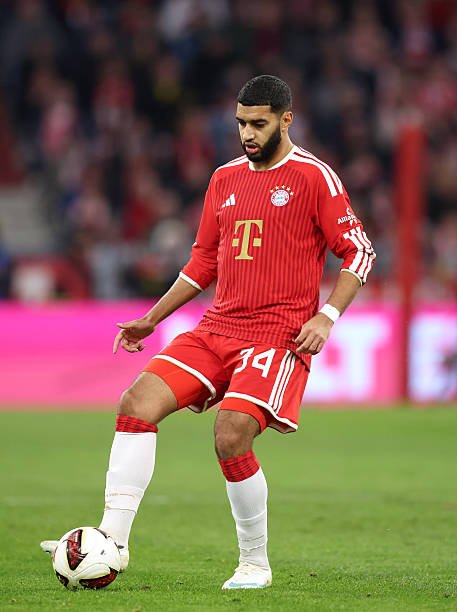
Ismael Saibari Biography: The Boy Who Couldn’t Walk, Now Running World Football
Ismael Saibari biography begins with a diagnosis that could have ended everything before it started. Born with both feet turned sharply inward, doctors were not sure he would ever walk normally. He took his first unaided steps at two years old. Twenty-five years later, he was scoring for Morocco at the World Cup and signing for Bayern Munich.
Saibari was born on January 28, 2001, in Terrassa, a city just outside Barcelona, Spain. His parents, Hassan and Fatima, had left Morocco in the late 1980s, settling first in Almería before moving to Terrassa in Catalonia. His father was a bricklayer. His mother helped run a grocery store. They were a humble family in a working-class neighbourhood .
The First Battle
Saibari’s first battle was not for a contract or a trophy. It was for the ability to walk.
He was born with a pronounced deformity in both feet. Doctors doubted whether he would ever walk normally. His parents refused to accept that. They enabled their son to undergo a lengthy period of treatment — splints, orthopaedic aids, and rehabilitation. After almost a year, the defect was corrected. At the age of two, Ismael took his first steps unaided .
“Fortunately, it worked,” Saibari has said, recalling the device designed to help babies develop a normal walking pattern. At the time, becoming a professional footballer was the furthest thing from his mind. His only goal was to be able to walk normally.
The Boy Who Hated Extra Training
Once he could walk, he could run. And once he could run, he could play football.
He was always in love with the ball. His older brother Akram remembered: “Isma wanted to play constantly.” Neighbours recalled a child who was never seen without a football, running around like crazy, chasing it and his brother .
His father, Hassan, made it a priority to ensure his son did not rely solely on his strong right foot. After every regular training session, Saibari had to take between 50 and 60 shots every day using only his left foot.
“At first, I hated it,” Saibari recalled in Bayern Munich’s magazine 51. While his teammates were long on their way home, his extra training session often was not even starting yet. Today, the forward views that time in a completely different light: “In the end, it paid off” .
He began playing for local side Club Deportivo Can Parellada, a club that became a hub for families from many different backgrounds. People at the club remember a young Saibari standing out for his powerful shot and versatility. He would be out on the pitch every day of the week. Coaches often had to tell him off because he would stay behind to play once his own training session had finished and get in the way of other teams .
The Move That Changed Everything
In 2007, the family’s life changed overnight. Hassan lost his job as a bricklayer. The grocery store he opened with Fatima did not survive the financial crisis. “We had to start from scratch again,” Akram said. Ismael was six when the Saibaris packed their suitcases and moved to Belgium, to a suburb of Antwerp .
The brothers initially played at KVC Willebroek. Saibari then moved through the youth academies of Beerschot, Anderlecht, KV Mechelen, and KRC Genk.
At Anderlecht, he was released. The club’s officials did not consider him physically capable enough to perform at a high level. Ironically, his physicality is now one of his greatest strengths. At 1.85m, he combines dynamism, toughness, and technical skill at the highest level .
PSV Eindhoven: The Making of a Star
Saibari moved to PSV Eindhoven on July 29, 2020, signing a three-year contract. He initially featured for Jong PSV in the Eerste Divisie. He made his senior debut on November 1, 2020, coming on as a substitute for Mario Götze in a 4-0 victory over ADO Den Haag .
He scored his first goal for PSV on August 19, 2023, in a 3-1 away win over Vitesse. Later that month, he scored twice in a 5-1 win over Rangers in the Champions League play-off round, securing a spot in the group stage and earning Man of the Match honours. He made his first group stage appearance on September 20, 2023, starting against Arsenal at the Emirates Stadium .
In the 2023/24 season, he helped PSV win the Eredivisie, playing in 31 matches and scoring 8 goals. The following season, he became a regular starter. He was named Eredivisie Player of the Year after helping PSV retain the league title .
Bayern Munich: The €55 Million Move
In the summer of 2026, Saibari joined Bayern Munich for a reported €55 million. He signed a contract until 2031 . Vincent Kompany was a decisive factor in his decision. The Bayern coach made it clear how much he wanted him. Kompany played a key role, and Saibari is considered his top transfer target .
Former Bayern defender Medhi Benatia praised Saibari’s speed, technique, and ability to make an impact under pressure. His former coach, Kevin Van Dessel, described him as a modern “nine-and-a-half” who creates depth in attack and works hard defensively. Off the field, Saibari speaks five languages and now wants to learn German .
Morocco: The World Cup Breakthrough
Saibari represented Morocco at Under-20 and Under-23 levels before making his senior debut in 2024. He has 37 caps and 12 goals for his country .
At the 2026 World Cup, he was one of Morocco’s standout players. He scored three goals in the group stage, against Brazil, Scotland, and Haiti. In the round of 16, he converted the decisive penalty in the shootout against the Netherlands. His tournament ended in the last 16 against Canada, when he sustained a muscle injury that forced him to miss the quarter-final against France. Morocco were eliminated without him .
He finished the tournament as Morocco’s leading scorer. And he left it as one of the most sought-after players in Europe.
My Take: The Diagnosis Was the Beginning
Everyone will talk about the €55 million fee. The Eredivisie Player of the Year award. The World Cup goals. The Bayern Munich move.
But the real story of this Ismael Saibari biography is the diagnosis.
He was born with both feet turned inward. Doctors were not sure he would walk. His parents refused to accept that. They put him through a year of splints, orthopaedic aids, and rehabilitation. He took his first steps at two.
Then he had to learn to run. Then he had to learn to play. Then he had to learn to use his left foot, 50 to 60 shots a day, every day, because his father would not let him rely on his right.
Anderlecht released him because he was not physically capable. Bayern Munich signed him because he was.
He is 25 now. He is a Bayern Munich player. He is a Morocco international. He is a World Cup star. And he is still the same boy from Terrassa who was not supposed to walk.
The diagnosis was not the end. It was the beginning.
FAQs
Where was Ismael Saibari born?
Terrassa, Spain, on January 28, 2001. His parents are Moroccan, from Ksar el-Kebir .
What was Saibari’s childhood health condition?
He was born with a clubfoot malformation in both feet. Doctors doubted whether he would walk normally. He wore orthopedic braces and took his first unaided steps at two years old .
Why did Anderlecht release Saibari?
They did not consider him physically capable enough to perform at a high level. He was later signed by PSV Eindhoven .
When did Saibari join Bayern Munich?
Summer 2026, for a reported €55 million. He signed a contract until 2031 .
How many goals did Saibari score at the 2026 World Cup?
Three, against Brazil, Scotland, and Haiti. He also scored the decisive penalty in the shootout against the Netherlands .
How many languages does Saibari speak?
Five: Dutch, French, English, Arabic, and Spanish. He is learning German .
Data from:
- FIFA. (2026, June 27). Saibari’s remarkable road to the World Cup.
- FC Bayern. (2026, August 5). Ismael Saibari: Against all odds.
- OneFootball. (2026, August 7). “I hated it…”: Bayern’s new signing Saibari reveals the secret to his success.
- Mundo Deportivo. (2026, June 30). Morocco World Cup hero Saibari overcame childhood walking problems before his rise to stardom.
- Wikipedia. Ismael Saibari.


