
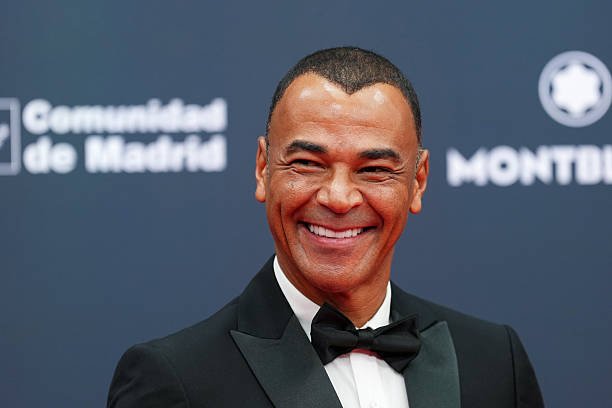
Cafu Biography: How “Il Pendolino” Revolutionized the Right-Back Role
Few players in football history embody endurance, leadership, and attacking full-back play like Marcos Evangelista de Morais, known around the world as Cafu (Wikipedia). Born on 7 June 1970—the very day Pelé and Brazil defeated England at the 1970 World Cup in Mexico—Cafu grew up to become one of the most decorated and influential defenders the sport has ever seen (Inside FIFA).
Long before overlapping full-backs became a tactical standard, Cafu turned the right flank into a two-way highway, directly inspiring modern stars such as Dani Alves, Trent Alexander-Arnold, and Achraf Hakimi (Wikipedia). This Cafu biography traces his journey from early youth rejections in São Paulo to club dominance in Brazil and Italy, culminating in a historic international career featuring 142 caps and three consecutive FIFA World Cup finals (Inside FIFA; Wikipedia).
Early Life, Youth Rejections, and Breakthrough at São Paulo (1970–1995)
Raised as one of six children in the Jardim Irene favela of São Paulo, Cafu entered a football academy at age seven and spent two years playing futsal while rising through junior sides such as Nacional-SP, Portuguesa, and Itaquaquecetuba (Wikipedia). As a child, he earned the nickname “Cafu” in honor of Brazilian winger Cafuringa (Wikipedia).
His path to professional football was anything but smooth. During the early 1980s, Cafu was rejected by the youth squads of Corinthians, Palmeiras, Santos, Atlético Mineiro, and Portuguesa (Wikipedia). Everything changed in 1988, when he finally earned a spot in the youth setup of his hometown club São Paulo and won the Copa São Paulo youth tournament that same year (Wikipedia).
Under the mentorship of coach Telê Santana, Cafu was encouraged to switch from right midfield to wing-back—a position he had never played before (Wikipedia). He adapted effortlessly, anchoring São Paulo’s starting lineup as the club captured back-to-back Copa Libertadores and Intercontinental Cup titles in 1992 and 1993 (Wikipedia). His relentless performances earned him the prestigious South American Footballer of the Year award in 1994 (Wikipedia; AS Roma).
Spain and Return to Brazil: Real Zaragoza, Juventude, and Palmeiras (1995–1997)
Halfway through the 1994–95 season, Cafu made his first move to Europe by signing for Spanish side Real Zaragoza, where he was part of the squad that won the 1995 UEFA Cup Winners’ Cup, though injury issues kept him out of the final (Wikipedia). Following his brief spell in Spain, he returned to Brazil to play for Juventude before joining Palmeiras in 1996, regaining top form ahead of a landmark return to European football (Wikipedia).
AS Roma Years & Becoming “Il Pendolino” (1997–2003)
In 1997, Cafu signed for Italian Serie A club AS Roma in a transfer worth 14.7 billion Italian lire (€7.6 million) (Wikipedia). He made his debut on 31 August 1997 against Hellas Verona, immediately supplying an assist, and went on to make 36 appearances in his debut campaign under manager Zdeněk Zeman (Wikipedia).
In Rome, Italian supporters nicknamed him “Il Pendolino”—after Italy’s high-speed express trains—because of his non-stop vertical runs up and down the right touchline (Wikipedia; Inside FIFA). Under manager Fabio Capello, Cafu helped Roma capture the 2000–01 Serie A Scudetto as well as the Supercoppa Italiana in 2001 (Wikipedia; FootballTop). Across six seasons with the Giallorossi, he played 218 total matches and scored 8 goals, including 163 Serie A appearances, earning an induction into the AS Roma Hall of Fame in 2012 (AS Roma; StatMuse).
AC Milan Glory and Retirement at 38 (2003–2008)
In 2003, Cafu moved north to join AC Milan, where he added even more major silverware to his collection (Wikipedia; AS Roma). In his first season (2003–04), he helped the Rossoneri win the Serie A title and the UEFA Super Cup, followed by the 2004 Supercoppa Italiana (FootballTop; Inside FIFA).
Cafu’s longevity shone brightest in Europe’s premier competition. After Milan fell short in the 2005 final, he collected a long-awaited UEFA Champions League winners’ medal in 2006–07, before adding another UEFA Super Cup and the 2007 FIFA Club World Cup (Wikipedia; FootballTop). Across his Serie A career with Milan, Cafu made 119 league appearances and scored 4 goals (StatMuse). When he announced his departure in May 2008 at the age of 37—shortly before turning 38—he signed off in style by scoring in Milan’s 4–1 victory over Udinese in his final professional match, later earning a place in the AC Milan Hall of Fame as well (Wikipedia).
Brazil National Team & Three Consecutive World Cup Finals (1990–2006)
Making his international debut on 12 September 1990 against Spain, Cafu went on to become the most-capped men’s player in Brazil’s history at the time, finishing with 142 international appearances and 20 FIFA World Cup matches (Wikipedia; FootballTop).
His World Cup record remains unmatched. Across four tournaments between 1994 and 2006, Cafu became the only player in history to appear in three consecutive FIFA World Cup finals (1994, 1998, and 2002) (Wikipedia; Inside FIFA). He won his first title in 1994, reached the final again in 1998, and captained Brazil to their fifth world crown in 2002 in Yokohama—making him one of only two professionals to win the World Cup in two different centuries (Wikipedia; Inside FIFA). On the continental stage, he also won two Copa América titles (1997 and 1999) and the 1997 FIFA Confederations Cup (Wikipedia).
My Take
What makes Cafu’s career stand out in the data isn’t just his trophy cabinet—it’s his extraordinary minute-by-minute durability in Europe’s toughest defensive league. Across 12 seasons in Europe’s top five leagues (with Real Zaragoza, Roma, and AC Milan), Cafu logged 298 league appearances, 23,796 minutes, 9 goals, and 82 clean sheets (StatMuse; StatMuse Career Stats).
Zooming into Serie A alone, he accumulated 22,856 minutes—ranking among the top Brazilian appearance-makers in Italian top-flight history—including 13,907 minutes in 163 Serie A games for Roma and 8,949 minutes in 119 Serie A games for AC Milan (StatMuse Brazil Serie A; StatMuse Roma; StatMuse Milan). Add 20 clean sheets in 55 UEFA Champions League appearances, and the numbers confirm why coaches trusted him well into his late 30s: he gave teams relentless attacking width without ever breaking defensive structure (StatMuse).
Frequently Asked Questions (FAQs)
What is Cafu’s real name and when was he born? Cafu’s full name is Marcos Evangelista de Morais, and he was born on 7 June 1970 in São Paulo, Brazil (Wikipedia).
How many caps did Cafu win for Brazil? Cafu earned 142 official caps for the Brazil national team between 1990 and 2006, including a Brazilian-record 20 FIFA World Cup appearances (Wikipedia; Inside FIFA).
What unique FIFA World Cup record does Cafu hold? Cafu is the only player in football history to appear in three consecutive FIFA World Cup finals (1994, 1998, and 2002), winning the tournament in 1994 and lifting the trophy as captain in 2002 (Wikipedia; Inside FIFA).
Why was Cafu nicknamed “Il Pendolino” in Italy? Italian fans nicknamed him “Il Pendolino” (after Italy’s high-speed express trains) because of his tireless stamina and constant overlapping runs up and down the right flank (Wikipedia; Inside FIFA).
Which major trophies did Cafu win with AS Roma and AC Milan? With AS Roma, he won the 2000–01 Serie A Scudetto and the 2001 Supercoppa Italiana. With AC Milan, he won the 2003–04 Serie A title, the 2006–07 UEFA Champions League, two UEFA Super Cups (2003, 2007), and the 2007 FIFA Club World Cup (Wikipedia; FootballTop).
Data From (Sources & References)
Official & Biographical Profiles: Wikipedia — Cafu, AS Roma — History Makers: Cafu, Inside FIFA — Behind the World Cup Record: Cafu, Inside FIFA — Cafu: The Memory of 2002
Career Statistics & Club Records: StatMuse — Cafu Top 5 League & UCL Stats, StatMuse — Cafu Career Stats, StatMuse — Cafu Appearances for Roma, StatMuse — AC Milan Brazilian Players, StatMuse — Brazil Players Most Appearances in Serie A, FootballTop — Cafu Profile


