

Breaking News: Lionel Messi Injury Inter Miami Announcement Shakes MLS Preseason
In a development that has sent ripples through the Major League Soccer community, Inter Miami CF has officially confirmed that captain Lionel Messi sustained a left hamstring injury during their recent preseason friendly against Barcelona SC in Ecuador. The Lionel Messi injury Inter Miami situation has prompted the club to postpone their highly anticipated friendly match against Independiente del Valle, originally scheduled for February 13, 2026, in Puerto Rico.
The announcement, made public on Wednesday, February 11, 2026, reveals that the Argentine superstar will not participate in the Puerto Rico fixture, with the match now rescheduled for February 26—just five days before Inter Miami’s crucial season opener against Los Angeles FC. This Lionel Messi injury Inter Miami news has raised significant concerns about the eight-time Ballon d’Or winner’s availability for the start of the 2026 MLS campaign.
The Incident: How the Lionel Messi Injury Inter Miami Crisis Unfolded
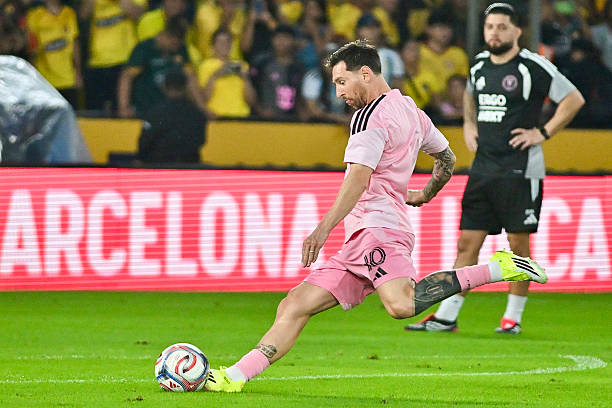
The Lionel Messi injury Inter Miami situation originated during Inter Miami’s preseason friendly against Barcelona SC on Saturday, February 7, 2026, at the Estadio Monumental Banco Pichincha in Guayaquil, Ecuador. The match, which ended in a 2-2 draw, saw Messi deliver a characteristically brilliant performance before his early departure raised immediate concerns among fans and team officials.
Messi opened the scoring for Inter Miami in the 31st minute with a trademark solo effort, demonstrating the magic that has made him one of football’s greatest players. The 38-year-old received the ball in the attacking half, surged forward with the ball at his feet, and unleashed a precise left-footed strike that beat Barcelona SC goalkeeper José David Contreras. The goal, Messi’s first of 2026, showcased the technical brilliance that continues to define his legendary career.
Beyond his goal, Messi also provided a crucial assist to new Inter Miami signing Germán Berterame in first-half stoppage time. The cross-field pass found the Mexican forward on the edge of the area, allowing Berterame to restore Inter Miami’s advantage after Barcelona SC had equalized through Joao Rojas. This contribution further highlighted Messi’s enduring importance to the team’s offensive structure.
However, the concern arose when Messi was substituted in the 58th minute, replaced by his longtime friend and former Barcelona teammate Luis Suárez. While substitutions are routine in preseason friendlies, the timing and context of this particular change sparked immediate speculation about a potential injury. Messi was subsequently observed watching the remainder of the match from the sidelines, a scene that would prove prophetic of the Lionel Messi injury Inter Miami announcement to come.
Official Medical Report: Understanding the Lionel Messi Injury Inter Miami Diagnosis
Inter Miami CF, in collaboration with Baptist Health, released a comprehensive medical update on Wednesday, February 11, 2026, providing detailed information about the Lionel Messi injury Inter Miami situation. According to the official statement, Messi did not participate in training on Wednesday due to a muscle strain in his left hamstring sustained during the match against Barcelona SC in Ecuador.
The medical report indicates that the injury has persisted since the Ecuador match, prompting the club’s medical team to conduct additional testing to determine the full extent of the strain. The statement emphasized that “Messi did not participate in training this Wednesday, February 11, due to a muscle strain in his left hamstring sustained during the match against Barcelona SC in Ecuador, which has persisted since then.”
Importantly, the club’s medical update provides no specific timeline for Messi’s return to action. Instead, Inter Miami adopted a cautious approach, stating that “his gradual return to training will depend on his clinical and functional progress in the coming days.” This measured language suggests that the club is prioritizing Messi’s long-term health over any immediate competitive considerations, a sensible approach given his importance to the team’s championship aspirations.
The lack of a definitive recovery timeline in the Lionel Messi injury Inter Miami announcement has led to widespread speculation about the severity of the hamstring strain. While the club has not classified the injury as minor or major, the decision to postpone the Puerto Rico match and the emphasis on a “gradual return” indicate that Inter Miami is taking no chances with their star player’s fitness.
Messi’s Personal Message: Addressing the Lionel Messi Injury Inter Miami Situation
In a move that demonstrates his commitment to transparency and respect for the fans, Lionel Messi personally addressed the Lionel Messi injury Inter Miami situation through a video message posted on his Instagram stories on Wednesday. The heartfelt message, delivered in Spanish, conveyed his disappointment at not being able to play in Puerto Rico while expressing optimism about a future visit.
“Hi everyone, I wanted to send this message to the people of Puerto Rico and all the people that will be going to the training session and game,” Messi began in his video statement. “To be honest, during the last game in Ecuador I concluded with a muscle strain, which is why I left the field early. So, together with the people of the organization and Inter Miami it was decided to suspend this game.”
The Argentine captain’s message continued with expressions of hope for the postponed match: “We hope it can be reprogrammed, and we can see each other. Visit you soon. Sending a hug to you all and thank you for all the love that you always give. I hope we can do it in the future, all the best.”
In a separate written statement, Messi elaborated on his feelings about the Lionel Messi injury Inter Miami development: “Unfortunately, I felt some muscle tightness in the last match, but we were really looking forward to seeing you, so together with the club we worked on finding an alternative date to be able to travel and play in Puerto Rico. We know the excitement and the desire you have to watch an Inter Miami match, and it will be very special to make it happen soon.”
This personal touch from Messi reflects his understanding of the significant disappointment fans in Puerto Rico must be experiencing. The island territory has long been eager to host the world’s most decorated footballer, and tickets for the original February 13 match had already been sold, making the postponement particularly challenging for supporters who had made plans to attend.
The Puerto Rico Match Postponement: Rescheduling Details
The Lionel Messi injury Inter Miami situation has led to significant changes in Inter Miami’s preseason schedule. The friendly match against Ecuadorian side Independiente del Valle, originally scheduled for Friday, February 13, 2026, at the Estadio Juan Ramón Loubriel in Bayamón, Puerto Rico, has been postponed by exactly two weeks to Thursday, February 26, 2026.
In an official statement released shortly after the injury announcement, Inter Miami CF outlined the details of the rescheduling: “The Club, in collaboration with the event promoter and the government of Puerto Rico, believe shifting the match will allow for the best experience for fans in Puerto Rico. The match will remain at 7 p.m. ET (8 p.m. Local) at Estadio Juan Ramón Loubriel in Bayamón, Puerto Rico and the opponent also remains Independiente del Valle.”
The decision to maintain all other aspects of the event—the venue, kickoff time, and opponent—while only adjusting the date demonstrates Inter Miami’s commitment to fulfilling their obligations to Puerto Rican fans. The collaboration between the club, event promoters, and the Puerto Rican government suggests a coordinated effort to minimize disruption while prioritizing the health of their marquee player.
Importantly, the new date of February 26 places the Puerto Rico friendly after Inter Miami’s MLS season opener against Los Angeles FC on February 21. This scheduling means the match will no longer serve as a final preseason tune-up but rather as an early-season engagement, potentially offering different tactical considerations for head coach Javier Mascherano.
Despite the postponement of the match itself, Inter Miami has confirmed that the team will still travel to Puerto Rico on February 12 to conduct a training session with local youth players. Additionally, an open practice session is scheduled for February 25, allowing fans to see the team in action even before the rescheduled friendly. These activities demonstrate the club’s awareness of their broader responsibilities to the football community in Puerto Rico.
Medical Analysis: Hamstring Injuries and Recovery Timelines
To fully understand the implications of the Lionel Messi injury Inter Miami announcement, it is essential to examine the nature of hamstring injuries and their typical recovery timelines in professional football. Hamstring strains are among the most common muscle injuries in soccer, accounting for a significant percentage of all muscle-related injuries at the professional level.
According to data from the UEFA Elite Club Injury Study, published in the British Journal of Sports Medicine, the average recovery time for a professional footballer with a hamstring injury ranges from approximately 17 to 21 days. However, this timeline can vary considerably depending on the severity of the strain, which is typically classified into three grades:
Grade I (Mild Strain): Involves minor tears to the muscle fibers, typically requiring 1-2 weeks of recovery. Players often experience mild pain and minimal loss of function.
Grade II (Moderate Strain): Involves a partial tear of the muscle, usually requiring 3-6 weeks of recovery. Players experience moderate pain, swelling, and noticeable loss of strength and flexibility.
Grade III (Severe Strain): Involves a complete tear of the muscle, potentially requiring 3-6 months of recovery and sometimes surgical intervention. Players experience severe pain, significant swelling, and complete loss of function.
The Lionel Messi injury Inter Miami medical report has not specified the grade of the hamstring strain, which makes it challenging to predict an exact recovery timeline. However, several factors provide clues about the potential severity:
- Early Substitution: Messi was removed from the match in the 58th minute, suggesting he felt discomfort significant enough to warrant immediate action.
- Persistent Nature: The medical statement notes that the injury “has persisted since then,” indicating ongoing symptoms rather than a minor issue that resolved quickly.
- Postponement Decision: The choice to postpone the Puerto Rico match suggests the medical team believes Messi needs more than just a few days of rest.
- Gradual Return Protocol: The emphasis on a “gradual return” indicates a conservative, step-by-step rehabilitation process rather than a rapid return to full training.
These factors collectively suggest a Grade I or potentially Grade II strain, which would place Messi’s recovery timeline in the 2-4 week range. Given that the Ecuador match occurred on February 7, and Inter Miami’s MLS season opener is scheduled for February 21—exactly two weeks later—the timing becomes critically important.
For a 38-year-old player, even if the injury is relatively minor, the recovery process may require additional caution. Age-related factors such as reduced muscle elasticity, longer recovery times, and increased susceptibility to re-injury all play a role in determining the appropriate rehabilitation approach. Inter Miami’s medical staff, led by Baptist Health, will undoubtedly consider these factors when managing Messi’s return to full fitness.
Implications for Inter Miami’s MLS Season Opener
The Lionel Messi injury Inter Miami situation has cast a shadow of uncertainty over the club’s highly anticipated MLS season opener against Los Angeles FC on Friday, February 21, 2026, at the Los Angeles Memorial Coliseum. This match, scheduled to take place at one of America’s most iconic sporting venues, represents one of the most significant regular-season fixtures in MLS history.
The LAFC vs. Inter Miami clash features numerous compelling storylines beyond the Lionel Messi injury Inter Miami concern. Most notably, it will pit Messi against South Korean superstar Son Heung-min, who joined LAFC in 2025 as the most expensive signing in MLS history. The two global icons have faced each other only twice before, both occasions coming during the 2018-19 UEFA Champions League group stage when Messi’s Barcelona met Son’s Tottenham Hotspur.
The venue change from LAFC’s usual home at BMO Stadium to the 77,500-capacity Los Angeles Memorial Coliseum underscores the magnitude of this fixture. The decision to move the match to the larger venue reflects MLS’s recognition of the drawing power created by the presence of both Messi and Son, with the league expecting the largest regular-season crowd in its history.
For Inter Miami, having Messi available for this season opener carries enormous significance for several reasons:
Competitive Advantage: Messi’s presence fundamentally alters Inter Miami’s tactical capabilities. His vision, passing range, dribbling ability, and goal-scoring threat make him the focal point of the team’s attacking play. Without him, Inter Miami would need to significantly adjust their game plan.
Championship Aspirations: As defending MLS Cup champions, Inter Miami enters the 2026 season with the expectation of competing for another title. Starting the season with a victory over a fellow championship contender like LAFC would provide valuable momentum and psychological advantage.
Commercial Impact: The commercial implications of Messi’s potential absence cannot be understated. Ticket sales, television viewership, and overall interest in the match are all heavily influenced by his participation. While Inter Miami would still field a strong team, the absence of their star attraction would diminish the spectacle.
Team Morale: For a squad that has built its identity around Messi’s leadership and brilliance, his absence could impact team confidence and cohesion, particularly in such a high-profile season-opening fixture.
Given the 17-21 day typical recovery timeline for hamstring strains, and the fact that 14 days will have elapsed between the Ecuador match and the LAFC game, Messi’s availability remains genuinely uncertain. Inter Miami’s medical staff will need to carefully balance the competitive desire to have their best player available with the medical imperative to avoid rushing his return and risking a more severe injury or prolonged absence.
The club’s statement that Messi’s return will depend on his “clinical and functional progress in the coming days” suggests that a final determination on his availability for the LAFC match may not be made until the days immediately preceding the fixture. This uncertainty creates a challenging situation for head coach Javier Mascherano, who must prepare tactically for both scenarios—with and without his captain.
Historical Context: Previous Messi Injury Concerns
The Lionel Messi injury Inter Miami situation is not the first time injury concerns have impacted the Argentine’s public appearances and match availability. Understanding this historical context provides valuable perspective on how such situations have been handled in the past and what lessons might be applied to the current circumstances.
Most notably, in February 2024, Messi was sidelined from a preseason friendly in Hong Kong due to an injury, an absence that led to significant public outcry and controversy. The Hong Kong match was part of Inter Miami’s preseason tour, and Messi’s non-participation disappointed the 40,000 fans who had purchased tickets specifically to see the World Cup winner in action.
The Hong Kong incident resulted in widespread frustration, with fans feeling deceived by promotional materials that had heavily featured Messi. The event organizer, Tatler Asia, eventually offered partial refunds to ticket holders, and the Hong Kong government demanded an explanation from the organizers. Inter Miami issued a statement acknowledging the disappointment: “We recognize that the late decision caused frustration among our Hong Kong supporters and the event promoter, Tatler Asia.”
The controversy surrounding the Hong Kong match highlighted the unique challenges that come with managing a global superstar like Messi. His presence can drive ticket sales and generate enormous public interest, but when injury prevents his participation, the disappointment is correspondingly magnified. The situation also raised questions about the communication between the club, event organizers, and fans regarding player availability and injury updates.
In contrast to the Hong Kong situation, the current Lionel Messi injury Inter Miami handling appears more proactive and transparent. The club announced the injury and match postponement two days before the originally scheduled Puerto Rico friendly, providing fans with advance notice rather than a last-minute revelation. Additionally, Messi’s personal video message directly addressing the situation demonstrates a higher level of engagement with the affected fanbase.
Throughout his illustrious career, Messi has generally enjoyed remarkably good health and availability, particularly when compared to many other elite athletes. His ability to avoid serious injuries has been a crucial factor in his sustained excellence over two decades at the highest level of professional football. However, at 38 years old, the natural aging process means that minor muscle strains may become more frequent and require more conservative management.
During his time at Barcelona, Messi occasionally dealt with hamstring issues, particularly in the latter stages of his career with the Catalan club. These experiences informed Barcelona’s medical staff’s approach to managing his workload, including strategic rest during less critical matches and careful monitoring of training intensity. Inter Miami appears to be adopting a similar philosophy with the current injury situation.
The club’s decision to prioritize Messi’s long-term health over short-term competitive or commercial considerations reflects a mature understanding of player management. While the postponement of the Puerto Rico match creates inconvenience and disappointment, it demonstrates that Inter Miami is willing to make difficult decisions to protect their most valuable asset.
Fan Reaction and Puerto Rico’s Disappointment
The Lionel Messi injury Inter Miami announcement and subsequent postponement of the Puerto Rico friendly has generated a mixture of understanding and disappointment among fans, particularly those in Puerto Rico who had eagerly anticipated the opportunity to see the football legend in person.
Puerto Rico has a passionate football fanbase, despite the sport competing with baseball for cultural dominance on the island. The opportunity to host Inter Miami and witness Messi’s brilliance at the Estadio Juan Ramón Loubriel represented a historic moment for Puerto Rican football. Many fans had already purchased tickets, made travel arrangements, and planned their schedules around the February 13 fixture.
The postponement to February 26 provides hope that the match will eventually take place, but the two-week delay creates complications for many attendees. Some fans may have work or personal commitments that prevent them from attending on the new date, while others face the challenge of modifying travel and accommodation arrangements. The financial and logistical impact of the postponement falls primarily on the fans, adding to their frustration.
Social media reactions to the Lionel Messi injury Inter Miami news have been varied. Some fans have expressed sympathy for Messi and appreciation for his personal message acknowledging the disappointment. Others have voiced frustration, particularly those who traveled from other islands or countries specifically for the February 13 match. The debate reflects the broader challenge of managing expectations when injuries impact high-profile events.
Inter Miami’s decision to maintain the scheduled training session with local youth on February 12 provides some consolation for the Puerto Rican football community. While not equivalent to seeing Messi play in an official match, the youth training session offers valuable opportunities for young Puerto Rican players to interact with Inter Miami’s coaching staff and potentially other star players. The additional open practice on February 25 further demonstrates the club’s commitment to engaging with the local community despite the match postponement.
From a broader MLS perspective, the Lionel Messi injury Inter Miami situation underscores the league’s dependence on individual stars to drive interest and attendance. While MLS has worked diligently to build a sustainable model based on competitive balance and growing domestic talent, the reality is that marquee players like Messi and Son Heung-min generate disproportionate attention and revenue. This dependence creates vulnerability when injuries impact star players’ availability.
The situation also highlights the unique challenges of scheduling international friendlies during the preseason period. While these matches provide valuable preparation and generate significant revenue, they also carry inherent injury risks. Teams must balance the competitive and commercial benefits of preseason tours against the potential for injuries that could impact the regular season.
Tactical Implications for Javier Mascherano
The Lionel Messi injury Inter Miami situation presents significant tactical challenges for head coach Javier Mascherano, who must prepare his team for multiple scenarios as the 2026 MLS season approaches. Mascherano, himself a former Argentina international and Barcelona legend who played alongside Messi for both club and country, understands better than most the unique impact his captain has on team dynamics.
Inter Miami’s tactical system has been built around maximizing Messi’s strengths while accommodating his limited defensive responsibilities. The team typically employs a formation that allows Messi to operate as a false nine or attacking midfielder, giving him the freedom to drop deep to collect the ball, drift wide to exploit space, or make decisive runs into the penalty area. This flexibility creates a fluid attacking structure that has proven highly effective when Messi is on the pitch.
Without Messi available, Mascherano faces several tactical decisions:
Formation Adjustments: Inter Miami may need to adopt a more structured formation that doesn’t rely on Messi’s individual brilliance to create offensive opportunities. This could involve playing with a traditional striker leading the line or deploying a more rigid midfield structure to control possession.
Redistribution of Creative Responsibilities: Messi’s vision and passing ability make him the primary creative force in Inter Miami’s attack. Without him, other players must step into more prominent playmaking roles. Sergio Busquets, if healthy and available, could assume greater responsibility for dictating tempo from deep positions. New signing Germán Berterame may also be asked to contribute more to chance creation in addition to his goal-scoring duties.
Set Piece Responsibilities: Messi is Inter Miami’s primary set-piece taker for both free kicks and corners. His absence would require redistributing these responsibilities to other players, potentially impacting the team’s effectiveness in dead-ball situations.
Defensive Balance: While Messi’s defensive contributions are limited, his presence actually helps Inter Miami defensively by controlling possession and dictating the tempo of matches. Without him, the team may need to adopt a more defensive approach to compensate for reduced control of the ball.
Mental Approach: Perhaps most significantly, Mascherano must manage the psychological impact of potentially playing without the team’s captain and best player. The coach will need to instill confidence in his squad that they can compete at the highest level even without Messi on the pitch.
The February 26 friendly against Independiente del Valle, now scheduled after the season opener, will likely serve a different purpose than originally intended. Rather than a final preseason preparation, it may become an opportunity to reintegrate Messi into match action or to continue developing tactical approaches for games without him. Mascherano’s tactical flexibility will be tested throughout this period.
Inter Miami’s Depth and Squad Options
The Lionel Messi injury Inter Miami development highlights the importance of squad depth as Inter Miami pursues another MLS Cup championship. While losing Messi would be a significant blow to any team, Inter Miami has invested heavily in building a roster capable of competing even without their star attraction.
The club’s attacking options beyond Messi include:
Luis Suárez: The 39-year-old Uruguayan striker remains a potent goal-scoring threat despite his age. Suárez’s understanding with Messi, developed over many years at Barcelona, is invaluable, but he is also capable of leading the line independently. His physicality, positioning, and finishing ability make him a dangerous threat in the penalty area.
Germán Berterame: The new Mexican signing from Monterrey has already shown promising signs in preseason, scoring in the Ecuador match after receiving Messi’s assist. At 26 years old, Berterame brings youth, energy, and goal-scoring instinct to Inter Miami’s forward line. His integration into the team could accelerate if forced into a larger role due to the Lionel Messi injury Inter Miami situation.
Mateo Silvetti: The Argentine forward provides another attacking option with pace and technical ability. While less proven than Suárez or Berterame, Silvetti’s development could benefit from increased playing time if Messi is unavailable.
In midfield, Inter Miami possesses considerable quality:
Sergio Busquets: If healthy, the Spanish midfielder’s experience and technical excellence provide a solid foundation for the team’s possession-based style. Busquets’s ability to control tempo and distribute the ball effectively becomes even more critical without Messi’s creative influence.
Rodrigo De Paul: The Argentina international brings energy, work rate, and technical quality to Inter Miami’s midfield. His World Cup-winning experience and understanding of playing alongside Messi in the Argentina national team make him a valuable asset during this challenging period.
Federico Redondo: The young Argentine midfielder has shown promise in preseason and could be asked to contribute more if the Lionel Messi injury Inter Miami situation requires tactical adjustments.
Defensively, Inter Miami has strengthened their backline with several quality additions, though the specific defensive personnel will depend on fitness and availability. The club’s investment in defensive reinforcements reflects an understanding that championship-winning teams must be solid at the back, regardless of their attacking firepower.
The Lionel Messi injury Inter Miami challenge will test the depth that the club has assembled. While no roster can truly replace a player of Messi’s caliber, Inter Miami’s investment in quality throughout their squad provides some insurance against the impact of injuries to key players.
Baptist Health’s Role in Messi’s Recovery
Inter Miami’s partnership with Baptist Health, one of South Florida’s premier healthcare systems, plays a crucial role in managing the Lionel Messi injury Inter Miami situation. The collaboration between the club and Baptist Health ensures that Messi receives world-class medical care and rehabilitation support throughout his recovery process.
Baptist Health’s sports medicine program has experience working with elite athletes across various sports, providing them with the expertise necessary to handle complex muscle injuries like hamstring strains. The medical team’s approach to Messi’s injury will likely include several key components:
Initial Assessment and Imaging: The first step in treating any muscle strain involves accurate diagnosis through clinical examination and imaging studies such as MRI scans. These tests help determine the exact location and severity of the tear, informing the treatment plan and recovery timeline.
Acute Phase Management: In the initial days following the injury, treatment focuses on reducing inflammation and pain through rest, ice, compression, and elevation (RICE protocol). Anti-inflammatory medications may be prescribed if appropriate, though many medical teams now favor a more conservative approach to avoid potentially delaying the healing process.
Progressive Rehabilitation: As the acute pain and inflammation subside, the rehabilitation program progresses through several stages. This includes gentle stretching to restore flexibility, strengthening exercises to rebuild muscle capacity, and sport-specific drills to prepare for return to play. Each stage must be completed successfully before progressing to the next.
Return to Play Protocol: Before Messi can return to full training and match action, he will need to demonstrate specific functional benchmarks. These typically include pain-free range of motion, adequate strength compared to the uninjured leg, and the ability to perform high-intensity running, cutting, and kicking without discomfort.
Injury Prevention: Beyond treating the current injury, Baptist Health’s medical team will work to identify and address any underlying factors that may have contributed to the hamstring strain. This could include strength imbalances, flexibility limitations, or biomechanical issues that increase injury risk.
The “gradual return” mentioned in the Lionel Messi injury Inter Miami medical report reflects modern best practices in sports medicine. Rushing a player back from a hamstring injury significantly increases the risk of re-injury, which could lead to a more severe tear and a substantially longer absence. By taking a conservative approach, Inter Miami and Baptist Health demonstrate their commitment to Messi’s long-term health over short-term competitive considerations.
Economic Impact of the Postponement
The Lionel Messi injury Inter Miami announcement and subsequent match postponement carries significant economic implications for multiple stakeholders, including Inter Miami, event promoters, the Puerto Rican government, and local businesses.
For Inter Miami, the postponement creates a complex financial situation. While the club will still play the match on February 26, the rescheduling may impact ticket sales, particularly if some fans cannot attend on the new date. Additionally, the club faces potential costs related to travel and accommodation changes, though these are likely minimal compared to the broader financial considerations.
The event promoters, who collaborate with Inter Miami and the Puerto Rican government to organize the match, face more substantial challenges. They have already invested significant resources in marketing, logistics, and venue preparation for the February 13 date. The postponement requires additional investment to re-promote the February 26 fixture while managing potential refund requests from ticket holders unable to attend on the new date.
For Puerto Rico’s government and local economy, the postponement represents a short-term setback but maintains long-term opportunity. The match is expected to generate significant tourism revenue as fans travel to the island, stay in hotels, dine at restaurants, and spend money at local businesses. While the two-week delay may reduce the total economic impact if some visitors cannot reschedule their travel plans, the event still promises substantial benefit to the local economy.
Hotels, restaurants, and other hospitality businesses in the Bayamón area and throughout Puerto Rico will experience the ripple effects of the postponement. Some businesses may have staffed up or ordered additional inventory in anticipation of the February 13 match, creating short-term challenges. However, the confirmation of a new date provides clarity and allows businesses to adjust their planning accordingly.
The broader economic impact extends to MLS and its broadcast partners. The Lionel Messi injury Inter Miami situation, particularly its implications for the season opener against LAFC, could affect television viewership and advertising revenue. While Inter Miami remains a compelling team even without Messi, his absence would likely reduce casual fan interest in the fixture.
It’s worth noting that Inter Miami’s financial model relies heavily on Messi’s presence. The club commands premium ticket prices, sponsorship deals, and merchandise sales largely based on his drawing power. While a short-term injury during preseason has minimal financial impact, any extended absence during the regular season would carry more significant economic consequences.
The Broader MLS Narrative: Star Power and League Growth
The Lionel Messi injury Inter Miami situation illuminates broader themes about Major League Soccer’s development, particularly its increasing reliance on international superstars to drive growth and global recognition.
Messi’s arrival at Inter Miami in July 2023 marked a watershed moment for MLS. His signing generated unprecedented global attention, dramatically increased television viewership, drove record merchandise sales, and elevated the league’s profile in international football discourse. The “Messi Effect” extended beyond Inter Miami, with other MLS teams reporting increased attendance when the Argentine visited their stadiums.
The 2026 season represents another significant milestone for MLS with the additions of both Messi and Son Heung-min. The South Korean superstar’s move to LAFC created similar buzz, with the two players now representing the league’s most marketable assets. Their presence has attracted increased investment from sponsors, broadcast partners, and potential team owners who see MLS’s growth trajectory.
However, the Lionel Messi injury Inter Miami development also reveals the inherent fragility of building a league’s identity around individual stars. While having Messi and Son elevates MLS’s profile, it also creates vulnerability when injuries affect their availability. The league must balance leveraging their star power with developing a sustainable model that doesn’t overly depend on any single player.
This tension reflects a long-standing debate within American soccer about the optimal path for MLS development. One school of thought advocates for continued investment in established international stars to raise the league’s profile and attract fans. The opposing perspective emphasizes building through developing domestic talent and creating competitive balance that makes every team a credible title contender.
The reality is that MLS likely needs both approaches. International stars like Messi and Son provide the glamour and attention that attract new fans and drive commercial growth. Meanwhile, developing American players and maintaining competitive balance ensures long-term sustainability and supports U.S. national team development.
The 2026 season carries additional significance as MLS prepares to pause during the FIFA World Cup, which will be co-hosted by the United States, Mexico, and Canada. The World Cup presents a tremendous opportunity for MLS to showcase itself to a global audience and potentially attract new fans who develop an interest in soccer during the tournament. Having healthy, performing stars like Messi visible during the portions of the season before and after the World Cup break could significantly amplify this opportunity.
Looking Ahead: Recovery Timeline and Season Outlook
As Inter Miami navigates the Lionel Messi injury Inter Miami situation, attention now turns to the coming days and weeks. Several key dates and milestones will determine how this injury ultimately impacts Inter Miami’s championship aspirations:
February 13-20: This period represents the critical rehabilitation phase where Messi’s progress will determine his availability for the season opener. Inter Miami’s medical staff will carefully monitor his response to treatment and progressive return to training activities.
February 21: The MLS season opener against LAFC at the Los Angeles Memorial Coliseum represents the first major test. Whether Messi plays in this match could significantly impact both the result and the broader narrative of Inter Miami’s season.
February 25: The open practice in Puerto Rico provides an opportunity to assess Messi’s condition and potentially give fans a first glimpse of him since the injury.
February 26: The rescheduled friendly against Independiente del Valle could serve as Messi’s return to match action if he misses the LAFC game, or as additional minutes if he makes a limited appearance against LAFC.
March 1: Inter Miami’s second MLS match against Orlando City represents their home opener, scheduled before the opening of their new Miami Freedom Park stadium.
April 4: Inter Miami’s first match at the new Miami Freedom Park stadium against Austin FC represents a historic moment for the franchise. Having a healthy Messi available for this milestone event holds enormous symbolic and commercial importance.
Beyond these immediate milestones, Inter Miami’s season outlook remains fundamentally strong despite the Lionel Messi injury Inter Miami concerns. The club enters as defending MLS Cup champions with a talented roster that has been further strengthened by strategic additions like Germán Berterame. Even if Messi misses the season opener, Inter Miami possesses sufficient quality to compete at the highest level.
The long MLS season, featuring 34 regular-season matches, provides ample opportunity to overcome early setbacks. More important than any single result is having Messi healthy and available for the crucial stretch run and playoffs. If the current injury requires an additional week or two of recovery beyond the season opener, that short-term absence could prove beneficial if it prevents a more serious re-injury later in the campaign.
Inter Miami’s medical staff and coaching team face a delicate balancing act. They must resist any temptation to rush Messi back prematurely while also ensuring he maintains match fitness and rhythm. The decision-making process will require constant communication between Messi, the medical team, and head coach Mascherano, with all parties aligned on prioritizing long-term success over short-term considerations.
Lessons from Other Elite Athletes’ Hamstring Injuries
Examining how other elite athletes have managed hamstring injuries provides valuable context for understanding the Lionel Messi injury Inter Miami situation and potential outcomes. Hamstring strains are remarkably common in sports requiring explosive sprinting and sudden changes of direction, making football particularly susceptible to these injuries.
Cristiano Ronaldo: Messi’s longtime rival has dealt with multiple hamstring issues throughout his career, particularly in his 30s. Ronaldo’s approach to managing these injuries has involved meticulous attention to rehabilitation protocols, extensive prehabilitation work to prevent recurrence, and strategic rest during less critical matches. His longevity at the highest level demonstrates that athletes can successfully manage hamstring problems without significant long-term impact.
Gareth Bale: The Welsh winger’s career was plagued by recurring hamstring injuries, particularly during his time at Real Madrid. Bale’s experience illustrates the danger of rushing back from initial strains, as he suffered multiple re-injuries that ultimately contributed to his decline and early retirement. His case serves as a cautionary tale about the importance of complete recovery before returning to competition.
Raheem Sterling: The English forward has successfully managed hamstring issues through a combination of strength training, flexibility work, and load management. Sterling’s medical team has employed a preventative approach, carefully monitoring his training volume and match minutes to reduce injury risk during congested fixture periods.
Sergio Agüero: The Argentine striker, another of Messi’s former national team colleagues, dealt with hamstring problems late in his career. His management involved significant rest periods and gradual return protocols, prioritizing long-term availability over short-term participation. Agüero’s experience highlights the importance of patience in hamstring injury recovery, particularly for aging athletes.
These cases collectively reinforce several key principles that likely inform Inter Miami’s approach to the Lionel Messi injury Inter Miami situation:
- Conservative Initial Treatment: Erring on the side of caution during the acute phase prevents more serious complications later.
- Comprehensive Rehabilitation: Simply waiting for pain to resolve is insufficient; proper strengthening and flexibility work are essential for preventing recurrence.
- Gradual Return: Progressively increasing training intensity and match minutes reduces re-injury risk.
- Load Management: Even after returning to play, carefully managing training volume and match minutes helps prevent future hamstring problems.
- Individualized Approach: What works for one athlete may not work for another; treatment must be tailored to the individual’s specific circumstances, age, and injury history.
At 38 years old, Messi’s age makes conservative management particularly important. While his legendary fitness and professionalism have allowed him to maintain elite performance longer than most players, the natural aging process does increase recovery time and re-injury risk. Inter Miami’s medical team will undoubtedly consider these age-related factors when determining the appropriate timeline for his return.
The Role of Prevention: Avoiding Future Injuries
Beyond treating the current Lionel Messi injury Inter Miami challenge, preventing future hamstring problems represents a critical priority for the club’s medical and performance staff. Hamstring injuries often recur, with research suggesting that athletes who have suffered one hamstring strain face significantly elevated risk of future injuries to the same muscle group.
Prevention strategies typically involve several complementary approaches:
Strength Training: Developing hamstring strength through exercises like Nordic hamstring curls, deadlifts, and single-leg movements can reduce injury risk. Importantly, this training must target the hamstring’s eccentric strength (controlling lengthening under load), which is particularly relevant for preventing strains during high-speed running.
Flexibility and Mobility Work: Maintaining adequate hamstring flexibility and hip mobility reduces strain on the muscle during explosive movements. This includes both static stretching protocols and dynamic mobility exercises integrated into warm-up routines.
Load Management: Carefully monitoring training volume, intensity, and match minutes helps prevent overuse injuries. This becomes increasingly important for older athletes like Messi, whose bodies require more recovery time between high-intensity efforts.
Biomechanical Assessment: Analyzing running mechanics and movement patterns can identify potentially problematic habits that increase hamstring strain. Correcting these through targeted coaching and exercise prescription can reduce injury risk.
Neuromuscular Training: Exercises that improve coordination, balance, and muscle activation patterns can enhance the body’s ability to protect itself during explosive movements. This includes agility drills, plyometric exercises, and sport-specific movement training.
Recovery Optimization: Adequate sleep, proper nutrition, and recovery modalities like massage, contrast therapy, and potentially technologies like compression therapy all support the body’s ability to handle training stress and reduce injury vulnerability.
Inter Miami’s performance staff likely already implements many of these strategies, but the Lionel Messi injury Inter Miami situation may prompt a review and intensification of prevention efforts. Given Messi’s immense importance to the team, investing additional resources in keeping him healthy makes obvious sense from both competitive and commercial perspectives.
The club’s partnership with Baptist Health provides access to cutting-edge sports medicine expertise and technology that can inform prevention strategies. This might include advanced biomechanical analysis, personalized training programs based on GPS and accelerometer data, or experimental recovery techniques that accelerate adaptation to training stress.
Conclusion: Navigating Uncertainty with Optimism
The Lionel Messi injury Inter Miami announcement has created significant uncertainty as the 2026 MLS season approaches. The postponement of the Puerto Rico friendly against Independiente del Valle, while disappointing for fans, reflects a prudent approach to managing the Argentine superstar’s health and availability.
As Inter Miami navigates this challenge, several key themes emerge:
Patience Over Urgency: The club’s conservative approach to Messi’s recovery, prioritizing long-term health over short-term availability, demonstrates mature player management that serves the team’s championship aspirations.
Squad Depth Matters: The investments Inter Miami has made in building a talented roster provide insurance against the impact of injuries to star players, though replacing Messi’s unique contributions remains impossible.
Communication and Transparency: The proactive announcement of both the injury and match postponement, combined with Messi’s personal message to fans, represents improved handling compared to past controversial situations.
Long-Term Perspective: In the context of a 34-match regular season, missing one or even several games carries limited consequences if it prevents more serious problems later in the campaign.
The coming days will bring greater clarity about Messi’s availability for the crucial February 21 season opener against LAFC. Regardless of the outcome, Inter Miami enters the 2026 season as legitimate championship contenders with or without their captain in the immediate lineup.
For Messi himself, this injury represents a minor setback in what remains a remarkable career that continues to defy age and expectations. His professionalism, fitness dedication, and world-class medical support position him well for a full recovery and another successful MLS campaign.
For Puerto Rican fans, the postponement to February 26 maintains hope of witnessing one of football’s greatest players in person. While the wait extends two additional weeks, the ultimate reward of seeing Messi play in Puerto Rico remains intact.
The Lionel Messi injury Inter Miami situation serves as a reminder that even the world’s best players remain human and vulnerable to the physical demands of professional sport. How Inter Miami manages this challenge will reveal much about the club’s ambitions, resources, and commitment to sustained excellence in Major League Soccer’s increasingly competitive landscape.
As the story continues to unfold, one certainty remains: when Lionel Messi does return to the pitch, whether on February 21, February 26, or beyond, his presence will once again remind the football world why he is considered one of the greatest players ever to grace the game.


