

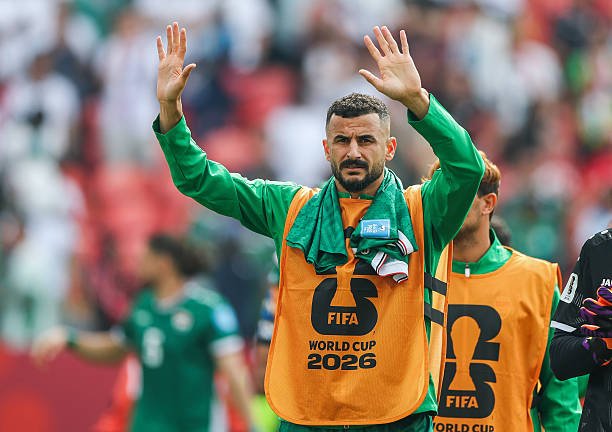
The 2026 FIFA World Cup field is officially set. After 937 days and 899 matches across six confederations, the 48th and final spot was claimed on Tuesday night in Monterrey, Mexico, where Iraq defeated Bolivia 2-1 in the intercontinental playoff final. Hours earlier, the Democratic Republic of Congo had booked its own ticket with a 1-0 extra-time win over Jamaica in Guadalajara.
For Iraq, the victory ends a 40-year absence from football’s grandest stage. The team’s last World Cup appearance came in 1986—also in Mexico—making this return a poetic full-circle moment. For DR Congo, the wait was even longer: 52 years since their only previous appearance in 1974, when the nation competed as Zaire.
But as two nations celebrated historic returns, one of football’s traditional giants was left to confront a deepening crisis. Italy will miss the World Cup for the third consecutive time, eliminated by Bosnia and Herzegovina on penalties after a 1-1 draw in Zenica.
Iraq’s Journey: From Logistical Chaos to Group I
The path to qualification was anything but smooth for Iraq. The team’s preparations were nearly derailed by airspace closures linked to regional conflict, leaving players stranded and unable to travel on commercial flights. Visa complications arose because Mexico has no embassy in Iraq, requiring intervention from Mexican foreign affairs officials to facilitate documentation through other regional embassies.
The squad finally arrived in Monterrey on March 21 after a 25-hour journey that included a stopover in Portugal. “Everything that is going on in the Middle East made it a little bit harder,” said Iraq head coach Graham Arnold. “But the main thing I said, and I worked very hard on, was their mentality. I banned social media since the day we got here.”
On the pitch, Iraq delivered. Ali Al-Hamadi headed in from a corner in the 18th minute, and after Bolivia equalized through Moises Paniagua, Aymen Hussein restored the lead in the 53rd minute with a composed first-time volley from eight yards. Bolivia pressed desperately for a late equalizer, but Iraq’s defense held firm through nine minutes of stoppage time.
“I’ve got to give so much thanks to the players,” Arnold said afterward. “Their work ethic, they showed the real Iraqi mentality of fighting and putting their bodies on the line. That’s why we won the game.”
Iraq now joins Group I alongside France, Norway, and Senegal. Their opening match is set for June 16 against Norway at Foxborough, followed by France on June 22 in Philadelphia and Senegal on June 26 in Toronto.
DR Congo’s 52-Year Wait Ends in Extra Time
In Guadalajara, the Democratic Republic of Congo needed 100 minutes to break Jamaican resistance. Axel Tuanzebe, the Burnley defender born in the conflict-affected city of Bunia, bundled home from close range after a corner kick to send his nation to its first World Cup since 1974.
The goal was initially reviewed for a potential handball, but VAR ruled in Congo’s favor. The Leopards had dominated possession throughout the match but struggled to find a breakthrough against a stubborn Jamaican defense until Tuanzebe’s intervention.
The reaction back home was immediate. The Congolese government declared Wednesday a public holiday, with the labor ministry urging citizens to “celebrate in unity, fervour and national pride”. In Kinshasa, banks and shops closed as crowds celebrated through the early morning hours.
Congo’s journey to qualification was itself remarkable. The Leopards eliminated African giants Nigeria and Cameroon on their way to the playoff, a run that defied expectations. They now enter Group K, where they will face Portugal, Colombia, and Uzbekistan, opening against Cristiano Ronaldo’s Portugal on June 17 in Houston.
Italy’s Third Straight Absence: A Pattern, Not an Accident
For Italy, the familiar feeling of playoff heartbreak returned with brutal force. The Azzurri took an early lead through Moise Kean in the 15th minute after a goalkeeping error by Bosnia’s Nikola Vasilj. But the match turned just before halftime when defender Alessandro Bastoni was sent off for a last-man foul.
Reduced to ten men, Italy retreated deep, ceding possession and pressure. Bosnia finally broke through in the 79th minute when Haris Tabakovic equalized. Neither side could find a winner in extra time, sending the match to penalties—a stage that has become Italy’s recurring nightmare.
Sandro Tonali converted Italy’s first spot-kick, but Pio Esposito blazed over and Bryan Cristante struck the crossbar. Bosnia converted all four of their attempts, sealing Italy’s fate. The final score: 1-1 after extra time, 4-1 to Bosnia on penalties.
“It’s upsetting for everyone,” said Italy defender Leonardo Spinazzola. “We still can’t believe it.”
Head coach Gennaro Gattuso, who took over after Italy’s Euro 2024 disappointment, apologized to the nation. “It is very painful, but I am proud of the players,” he said. “They did not deserve this result after the fight and love they showed for the team.”
The numbers paint a stark picture. Since winning the 2006 World Cup, Italy has won just one World Cup match—a 2-1 victory over England in 2014 that ultimately proved meaningless as they exited in the group stage. They missed the 2018 tournament after losing a playoff to Sweden, missed 2022 after a shock defeat to North Macedonia, and now miss 2026 in the cruelest fashion yet.
For a four-time world champion—second only to Brazil’s five titles—the decline is historic. Before this run, Italy had missed only two World Cups in the tournament’s entire history, in 1930 and 1958. Now they have missed three consecutive editions, a nadir that demands uncomfortable questions about the structural health of Italian football.
The Full Picture: What’s Next
The completion of the 48-team field marks the beginning of a new era for the World Cup. The expanded format has brought debutants like Cape Verde, Curaçao, Jordan, and Uzbekistan into the fold, while veterans Lionel Messi, Cristiano Ronaldo, and Guillermo Ochoa are set for a record sixth World Cup appearance.
The tournament kicks off June 11 across 16 host cities in Canada, Mexico, and the United States, with 104 matches scheduled through July 19.
For Iraq and DR Congo, the coming months will be about preparation and belief. For Italy, they will be about something far harder: introspection, and figuring out how a nation with such a rich footballing history has become a permanent spectator at its own sport’s greatest event.


