
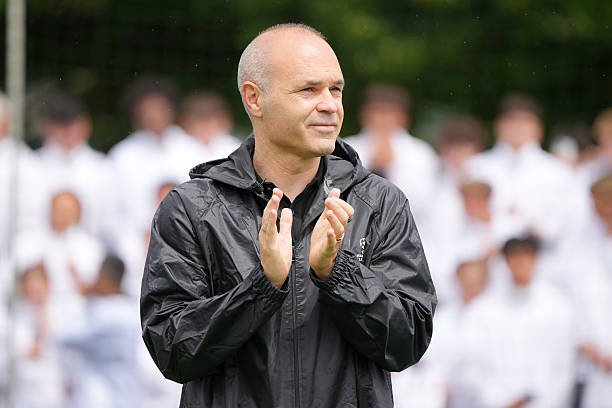
Andrés Iniesta Biography: From Fuentealbilla and La Masia to World Cup Immortality and Coaching in 2026
The Andrés Iniesta biography is the story of a quiet midfielder whose touch, vision, and big-game composure defined an era. Born Andrés Iniesta Luján on May 11, 1984, in Fuentealbilla, Spain (Wikipedia), Iniesta spent 22 years at FC Barcelona, scored Spain’s 2010 FIFA World Cup-winning goal, retired in October 2024 as one of the most decorated players in football history, and began his managerial career in 2026 as head coach of Gulf United FC (Britannica).
Early Life & La Masia: A Life-Changing Move
Starting in Albacete’s youth ranks (1994–1996), Iniesta moved to Barcelona’s famed La Masia academy in 1996—a transition he later described as “a life-changer” (Scottish Wikipedia; FC Barcelona). After progressing through Barcelona B, he made his senior first-team debut on October 29, 2002, in a 1–0 UEFA Champions League win at Club Brugge under Radomir Antić (Wikipedia).
FC Barcelona: 674 Games, Nine League Titles & Four Champions Leagues
Over 16 senior seasons in Catalonia (2002–2018), Iniesta became the heartbeat of Barcelona’s golden generation alongside Xavi Hernández and Lionel Messi. Across 674 official appearances for Barça, he won nine La Liga titles, four UEFA Champions Leagues, six Copa del Rey trophies, seven Supercopa de España crowns, three UEFA Super Cups, and three FIFA Club World Cups (Wikipedia; FotMob).
Appointed club captain in his final years, Iniesta even achieved one of football’s rarest honours on November 21, 2015: after scoring and assisting in a 4–0 El Clásico victory, he became only the third Barcelona player ever—after Diego Maradona and Ronaldinho—to receive a standing ovation from Real Madrid fans at the Santiago Bernabéu (Wikipedia). He signed a lifetime contract in 2017 before bidding an emotional farewell after his 674th match on May 20, 2018 (Wikipedia).
Spain National Team: Euro 2008, 2010 World Cup & Euro 2012
After winning youth European titles at U16 and U19 levels, Iniesta debuted for senior Spain in May 2006 (Wikipedia). He became the creative linchpin of La Roja‘s historic run—winning UEFA Euro 2008, the 2010 FIFA World Cup, and UEFA Euro 2012 to become the first national side ever to capture three consecutive major world/continental championships (Britannica).
His eternal moment arrived on July 11, 2010, in Johannesburg, when he struck the extra-time winner against the Netherlands to hand Spain their first World Cup trophy (Sportsnet). Individually, he finished second in the 2010 FIFA Ballon d’Or behind Messi, third in 2012, and won the 2011–12 UEFA Men’s Player of the Year award (Wikipedia; FBref).
Vissel Kobe, Retirement & 2026 Coaching Debut
Leaving Barcelona in 2018, Iniesta joined J1 League club Vissel Kobe in Japan (2018–2023), leading them to the 2019 Emperor’s Cup and 2020 Japanese Super Cup before spending a final playing season with UAE Pro League side Emirates Club and announcing his retirement on October 8, 2024, at age 40 (Britannica; FotMob).
In 2026, at age 42, Iniesta returned to the touchline, stepping into management as head coach of Gulf United FC in the United Arab Emirates (Britannica; Spanish Wikipedia).
My Take: The Unbeaten & Trophy Analytics Behind Iniesta’s Legacy
Iniesta is rarely judged by raw goal totals, which makes it easy to miss just how dominant his statistical footprint really was.
First, look at his team-impact streak: during Barcelona’s peak, Iniesta played a record 51 consecutive La Liga matches unbeaten—a run stretching all the way to March 2012 (Wikipedia). Across his career, he accumulated 40+ major team trophies (FootyStats; FotMob) and earned nine FIFA FIFPro World XI selections (FBref).
And in tournament football, his progression numbers defined Spain’s peak—helping La Roja surge past 688+ passes per game in Opta’s Euro 2012 tracking, over 100 more than their 2010 World Cup average of 588 (The Guardian). As he steps into coaching with Gulf United FC in 2026 (Britannica), Iniesta carries the rarest credential in football: every system he anchored simply refused to lose.
Frequently Asked Questions (FAQs)
When and where was Andrés Iniesta born? Andrés Iniesta Luján was born on May 11, 1984, in Fuentealbilla, Spain (Wikipedia; FC Barcelona).
When did Andrés Iniesta retire, and what is he doing in 2026? Iniesta retired from playing on October 8, 2024, at age 40 after finishing his career with Emirates Club, and in 2026 he became head coach of Gulf United FC in the UAE (FC Barcelona; Britannica).
How many appearances and trophies did Andrés Iniesta win at FC Barcelona? He made 674 official appearances for FC Barcelona (2002–2018), winning nine La Liga titles, four Champions Leagues, and six Copa del Rey trophies—part of 40+ career titles overall (Wikipedia; FootyStats).
What did Andrés Iniesta win with Spain? He won UEFA Euro 2008, the 2010 FIFA World Cup (scoring the extra-time winner in the final), and UEFA Euro 2012 (Britannica; Sportsnet).
Data From (Sources & References)
All career milestones, 2024 retirement details, 2026 coaching appointment, and historical analytics in this biography were compiled and verified from the following official and sports-data sources:
Club, Biography & 2026 Coaching Career: Encyclopaedia Britannica (Andrés Iniesta), FC Barcelona Official Retirement Tribute, Wikipedia (Andrés Iniesta), and Spanish Wikipedia
Career Trophies & Tournament Analytics: FBref (Andrés Iniesta Honours & Logs), FotMob (42 Career Titles), FootyStats, and The Guardian (Euro 2012 Opta Data)


